
Relationships
Exploring the hellish and Byzantine nature of human relationships.
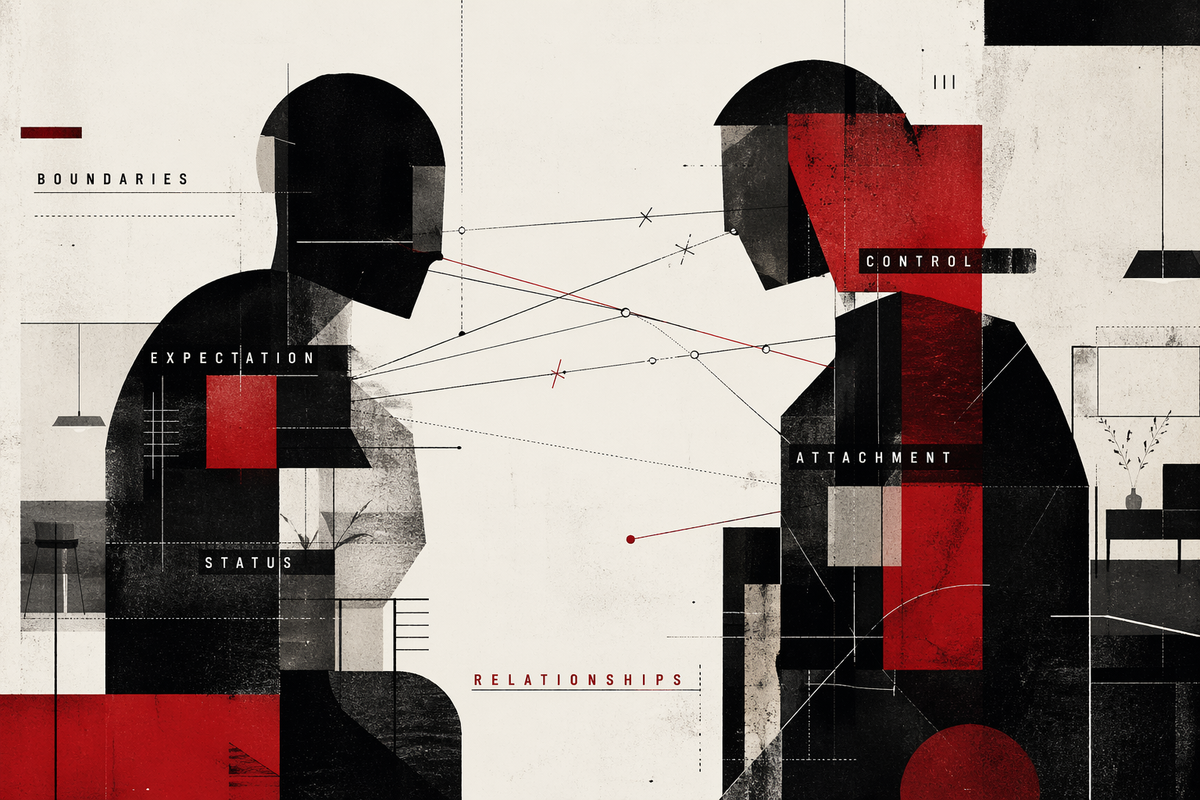
Relationships as Negotiated Systems
Relationships are often framed as emotional experiences. They are also structured systems governed by expectations, boundaries, and perceived value.
People bring preferences, histories, and incentives into every interaction. Those elements do not disappear in close relationships. They become more consequential.
This section examines relationships through that lens. Not as idealized connections, but as negotiated arrangements that either stabilize or fail under pressure.
The Forces That Shape Outcomes
Several dynamics consistently determine how relationships evolve.
Expectation alignment. When two people operate with different assumptions about roles, commitment, or behavior, friction becomes inevitable. Most conflicts trace back to mismatched expectations rather than isolated incidents.
Boundaries and enforcement. Stated boundaries mean little without enforcement. Individuals and families test limits, sometimes subtly, sometimes directly. Outcomes depend on whether those limits hold.
Status and positioning. Social dynamics do not disappear in personal relationships. Perceived status, both within the relationship and in external settings, shapes behavior and respect.
External systems. Families, social circles, and professional environments introduce additional pressures. In some cases, those systems support the relationship. In others, they destabilize it.
Where This Section Focuses
This section analyzes:
- Boundary failures and their long term consequences
- Family system dynamics, including enmeshment and control
- Status mismatches and social positioning within relationships
- Decision frameworks for evaluating long term viability
- Behavioral patterns that signal stability or risk
The throughline remains consistent: relationships succeed when structure and incentives align, and break down when they do not.