
Big Ten Transfer Portal Economics: Which Positions Give the Best Return on NIL Investment?
Which Big Ten transfer portal positions deliver the best NIL value? A data-driven look at football's changing economics.
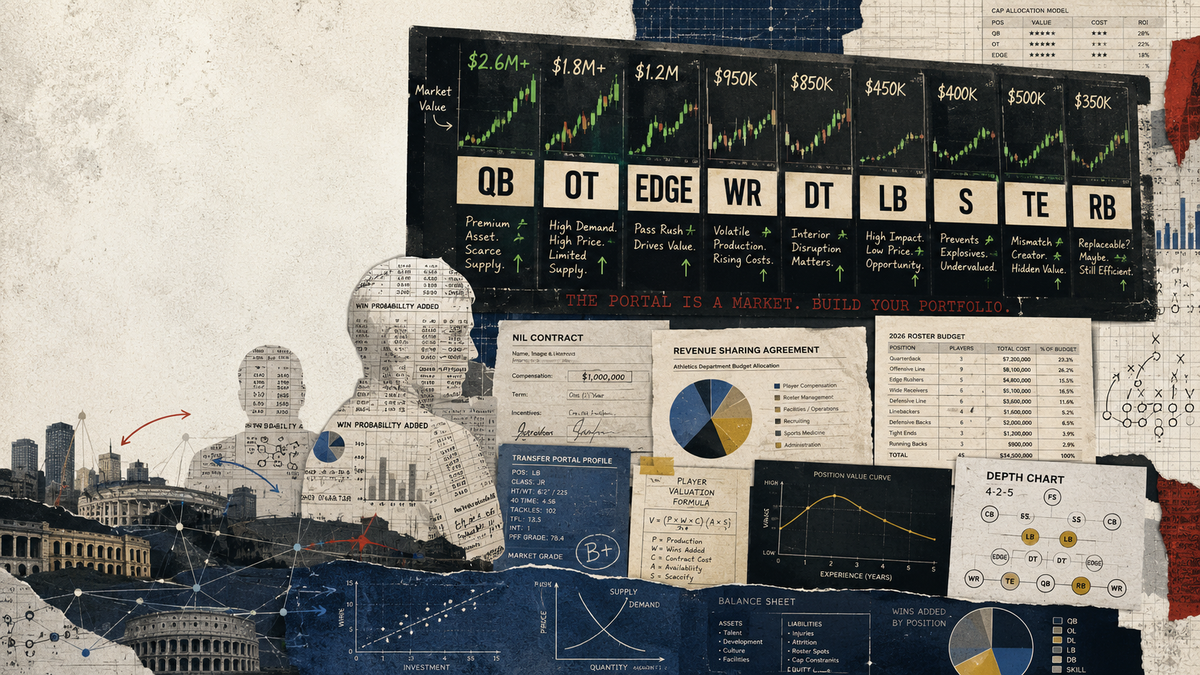
College football used to build rosters the slow way. Coaches signed high schoolers, waited a few years for them to grow up, and filled small gaps with junior college transfers. Money mattered, but it stayed in the background.
That's over now. Big Ten programs run their rosters more like sports franchises than college teams. Athletic departments have general managers and personnel staff whose whole job is figuring out how to spend limited money on players. Teams size up hundreds of transfer candidates and try to sign the right ones before someone else does.
It raises a question nobody's fully answered: which positions are worth the money?
Here's a rough look at where the market sits right now. These numbers aren't official: NIL deals are private and pay varies a lot by school. But based on reporting from agents and team staffers, this is a fair picture of what experienced Power Four transfers are commanding in the Big Ten.
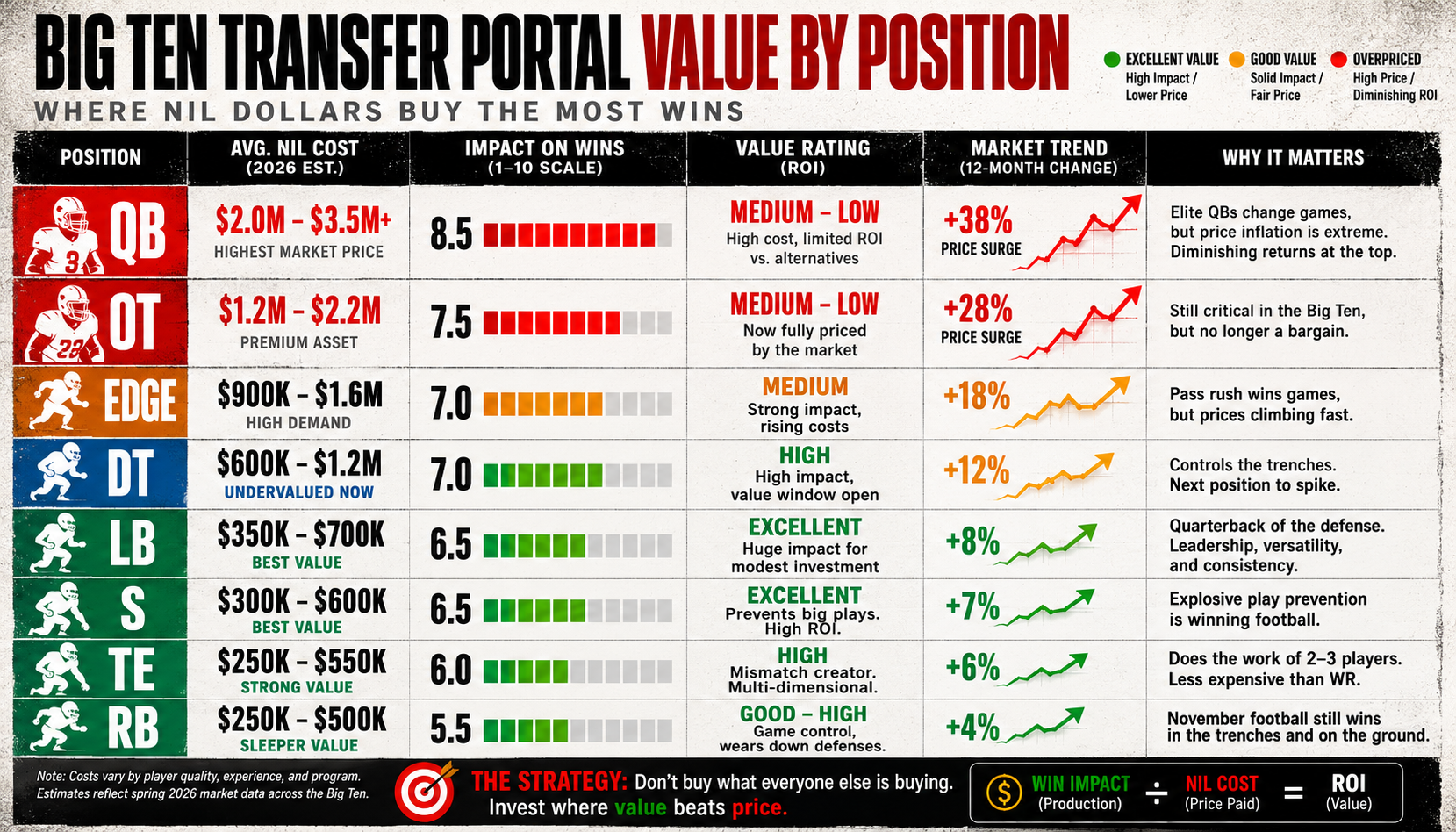
Estimated 2026 Big Ten Transfer Portal Market By Position
A few things stand out. Quarterbacks are in their own world, as top guys can earn over $2 million, with a few reportedly approaching $3 million. Offensive tackles have climbed the same way. A position that used to be a bargain is now one of the priciest, mostly because every good program wants an experienced tackle and there aren't enough to go around.
Edge rushers cost a lot for the same reason: they're rare. Receivers are climbing too, pushed up by offenses that throw more than ever.
Then the price drops off fast. Linebackers, safeties, tight ends, and running backs often cost less than half of what a top quarterback or tackle earns, sometimes a quarter as much. Defensive tackle sits in between, getting more expensive as coaches realize how tough the position is to fill.
The gap between these numbers matters more than the numbers themselves. Nobody's saying linebackers matter as much as quarterbacks. But are quarterbacks worth five or ten times as much? That's a much harder question, and the market hasn't really answered it.
Smart investors don't win by picking companies everyone already knows are good: everybody knows Apple is valuable. They win by figuring out if a good company is worth its current price. Football works the same way. A quarterback can be the most important player on the field and still be a bad value. A no-name linebacker can quietly deliver more returns per dollar than anybody realizes. Importance and value for money are two different things, and mixing them up is an expensive mistake.
In the early portal years, just knowing which positions mattered was enough to get ahead. Teams that jumped early on offensive linemen built a real edge. But once every school hired personnel staff and started using data, those bargains disappeared. What was once a smart insight became common knowledge, and common knowledge stops being an edge the moment everyone has it.
That's where the Big Ten sits today. The easy wins are gone. The hunt for the next one has already started.
How Quarterbacks and Tackles Got So Expensive
Markets don't go haywire by accident. It happens when everyone agrees on the same idea at the same time, and money keeps flowing there until the price stops matching the real value. That's what happened with quarterbacks and tackles. Everybody in football believes two things: quarterbacks win championships, and games are won in the trenches. Neither idea is wrong. But once every team believes the same thing, those positions stop being smart buys and just become expensive ones.
Quarterbacks deserve real credit here. They touch the ball on every play, read defenses, and often decide if a play works before the snap. No other position raises an offense's ceiling the same way. A team without a good quarterback knows that everything else it builds, the line, the receivers, even the defense, matters less. That pressure explains why quarterback pay keeps climbing. Teams aren't just paying for skill. They're paying to remove doubts.
But that doubt rarely goes away completely. Quarterbacks depend on the players around them just as much as those players depend on the quarterback. A great line, a real running game, veteran receivers, a steady coaching staff takes enough of that away, and even a very good quarterback starts to look average. Football doesn't let anyone succeed alone.
That creates a real math problem. If one quarterback costs $2.5 million and another good starter costs $1 million, is the pricier one worth two and a half times as many wins? Almost never. Pay usually rises faster than actual performance does. That gap is exactly how a market gets out of balance when the price starts to follow hype rather than results.
Offensive tackle followed the same path. Early on, good tackles were cheap and overlooked. Teams that noticed got a real edge: one solid tackle protects the quarterback, boosts the run game, and lets a coach open the playbook, all for a fraction of what a receiver costs. But the secret got out. Every broadcast now praises line play, and the NFL Draft keeps rewarding top tackles with early picks. Demand caught up, and so did the price. What used to be a bargain is now one of the most expensive buys in the portal.
That's not surprising. Bargains rarely last once everyone notices them.
There's an important difference between something being valuable and something being priced fairly. A gorgeous apartment building can be a great property and still be a bad purchase if the price already covers every advantage it offers. Tackles, quarterbacks, and edge rushers are genuinely valuable; nobody's arguing otherwise. The real question is whether the extra wins from paying top price outweighs what a program gives up by spending that money elsewhere.
Say a program has $3 million to spend. One option: sign the best quarterback available. The other, less flashy option: sign an experienced linebacker, a safety, a tight end, and a running back, four upgrades instead of one. Nobody knows for sure which path wins more games, and that uncertainty matters. A lot of portal talk assumes expensive signings automatically work better because they get headlines. But smart teams should judge moves by what they add, not by how much buzz they create. A roster with eight solid position groups often beats one with three stars and a lot of weak spots. Depth has always mattered in this conference, and as budgets tighten, it may matter even more.
The Big Ten's style of play makes this even more true. A November game in Iowa City or Madison looks nothing like a September game in California. The weather turns bad, injuries pile up, and offenses slow down as the year goes on. Winning this conference means surviving nearly six months of football, not just having a few great offensive performances. A linebacker who organizes a defense on a freezing night might matter more than another star receiver. A safety who quietly stops big plays can decide a championship race without ever making a highlight reel. The conference rewards complete rosters. The transfer market rewards star power. Those two things don't always line up.
History says every bubble eventually pops or at least deflates. Not because quarterbacks or tackles stop mattering; they'll always matter. But because markets keep searching for balance, and once everyone agrees an asset is great, the real edge moves somewhere else. The Big Ten programs that separate themselves over the next ten years probably won't be the ones winning bidding wars for the priciest players. They'll be the ones finding value nobody else has noticed yet.
The Next Undervalued Positions
Every market eventually runs out of obvious opportunities. Once everyone knows quarterbacks and tackles matter, their prices stop reflecting hidden value; they just reflect the fact that everyone agrees. So, where's the next edge?
Linebacker might be the best bargain in the conference. Modern linebackers read formations, call out adjustments, cover tight ends, blitz gaps, and often play every snap. Few players process more information or affect more teammates, but they rarely make headlines, and recruiting sites barely cover them compared to quarterbacks. Markets tend to undervalue things that are hard to measure, and a lot of what a good linebacker does never shows up in a stat line. A strong linebacker raises the floor of an entire defense: cleaner run fits, better communication, fewer mistakes from young players. None of that shows up in a box score, but it shows up in wins.
Safety works the same way. The best safeties often have quiet games, and that's a good thing; it means they stopped the big play before it happened. That doesn't earn a highlight, but it's worth just as much as a touchdown score. The Big Ten's physical, cold-weather style has always rewarded that kind of discipline, yet safety pay still hasn't kept pace with how much the position matters.
Tight end might be the most versatile position in football. A good one blocks like a lineman, protects the quarterback, creates mismatches in coverage, and moves the chains, often within the same game. One good tight end basically does the job of two or three specialists. The Big Ten has always leaned on multiple-tight-end formations more than most conferences. Even so, tight ends get paid far less than receivers, and that gap looks more like a fame problem than a value problem.
Running back may be the sport's most misunderstood position. The NFL decided years ago that paying big money for running backs usually isn't smart, and that idea trickled down to college football. But the Big Ten might be an exception. November football rewards teams that can run the ball and control the clock, and cold weather makes passing harder as the season goes on. Under those conditions, an experienced back becomes more valuable, while still costing a fraction of what a quarterback earns.
Defensive tackle probably won't stay cheap much longer. It's already showing signs of rising fast. Great interior defenders are hard to find and take years to develop, and they make everyone around them better; pass rushers get easier matchups, linebackers stay cleaner against the run, and quarterbacks lose their comfort in the pocket. As more analytics staffs start proving how much this matters, expect prices to climb the way tackle prices did a few years ago. That window for a bargain won't stay open long.
None of these four positions gets much attention. Together, though, they touch almost every play of the Big Ten season. A $350,000 linebacker who lifts an entire defense might be a smarter buy than a $2.5 million quarterback who only improves one spot on the field. That's not a knock on quarterbacks; it's just the same lesson every market eventually teaches. The smartest investments rarely look flashy at first.
Different Teams, Different Strategies
Not every program should shop the portal the same way, because no two programs are solving the same problem.
Oregon can afford to pay full price. With strong financial backing and national reach, the Ducks can add a premium quarterback or tackle on top of an already loaded roster, and that extra star often pays off more for a good team than a rebuilding one. Ohio State and Penn State, which already recruit at an elite level, don't need to rebuild through the portal. They just need to patch small gaps, like one lineman or one veteran safety, rather than buying whole position groups.
Michigan has leaned toward patience: recruiting, developing players, and adding veterans selectively instead of chasing the biggest portal class every year. That approach avoids bidding wars and could become a real advantage as prices keep climbing elsewhere.
Iowa and Wisconsin both have a track record of developing linemen and linebackers better than their recruiting rankings would suggest. That means they don't need to spend big at those spots; the smarter move is spending portal money on quarterbacks and receivers, the positions that are harder to develop in-house, and trusting their pipeline to keep handling the rest.
Nebraska faces a different trap. High expectations and constant coaching turnover create pressure to make a splashy signing, but a rebuilding program rarely fixes its problems with one or two expensive additions. Nebraska's real need is stability, which won't make headlines but usually pays off more. Matt Rhule’s preference for action and perhaps diversion has churned the Nebraska roster, with the attendant results. Reversing that trend requires patience. Thus far, Rhule has shunned patience and seems his own worst enemy.
Most of the conference's middle-tier schools, like Illinois, Minnesota, Indiana, Michigan State, Maryland, Purdue, Rutgers, UCLA, and Washington, face a similar challenge. None of them can assume unlimited money, but none of them are broke either. Their edge must come from smarter decisions, not bigger budgets.
Northwestern simply can't outbid the biggest schools, so its best shot is to find value before wealthier programs notice it: signing experienced linebackers, safeties, and tight ends instead of chasing starts that nobody in Evanston can actually afford.
Early in the portal era, spending money was an advantage because many schools hesitated. That's no longer true; almost every Big Ten program is actively competing now. The edge has shifted from who's willing to spend to who spends smartest.
What Comes Next
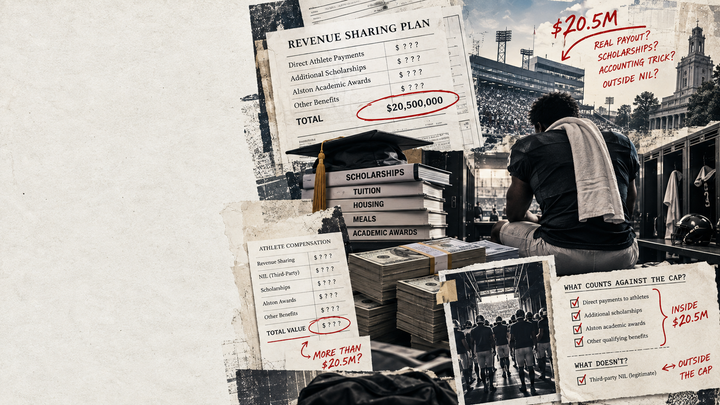
The portal is still young, and it's going to keep changing. Direct revenue sharing means schools are now managing real budgets rather than relying solely on external donors, which pushes programs to think more like businesses. Prices will likely keep rising at whichever position proves it can change games; defensive tackle looks next in line, and safety could follow if enough championship teams prove the position's value.
Strangely, the more expensive the portal gets, the more valuable old-fashioned player development becomes. Every player a program develops from high school is one less expensive transfer it has to buy. Schools with strong development, such as Iowa, Wisconsin, Michigan, and Penn State, should benefit the most from this shift.
The next real advantage in college football probably won't be visible to fans. A flashy quarterback signing will always get more attention than four or five smart, affordable additions, even if the second group wins more games. Fans tend to confuse visibility with value. Markets eventually catch up to that mistake.
No conference is better positioned to lead this shift than the Big Ten. It has huge TV money, a wide range of programs with varying budgets and strengths, and a level of competition that forces teams to think carefully rather than emotionally. Over the next decade, expect this conference to become the sport's biggest test case for smart roster building.
Football has always been a game of limited resources, limited scholarships, limited practice time, and limited roster spots. Now it competes in a free-labor market, and the limiting factors are NCAA revenue-sharing and NIL funding limits, too. The programs that keep winning Big Ten titles won't just be the ones who recruit the best players or spend the most money. They'll be the ones who spend it smartly.
The portal has turned roster building into a real economics problem, and the programs that figure that out first may end up defining the next decade of Big Ten football, not just on Saturdays, but in the meeting rooms where someone has to decide not just who to sign, but whether that player is actually worth what he costs.
Comments ()