
Penn State’s 2026 NIL Strategy and Football Roster Cost
Inside Penn State NIL in 2026, including revenue sharing, football roster costs, Happy Valley United, wrestling, ROAR Solutions, and adidas.
Penn State's 2026 NIL Strategy and Football Roster Cost
For most of the early NIL era, Penn State acted like a program that figured its history would eventually do the fundraising for it. The school had almost everything an athletic department could want: one of the largest alumni networks in the country, more than 100,000 fans packing Beaver Stadium every fall Saturday, a football brand recognized nationally, and championship-caliber programs spread across 31 varsity sports. What it lacked was a coordinated system to turn all that goodwill into real athlete compensation.
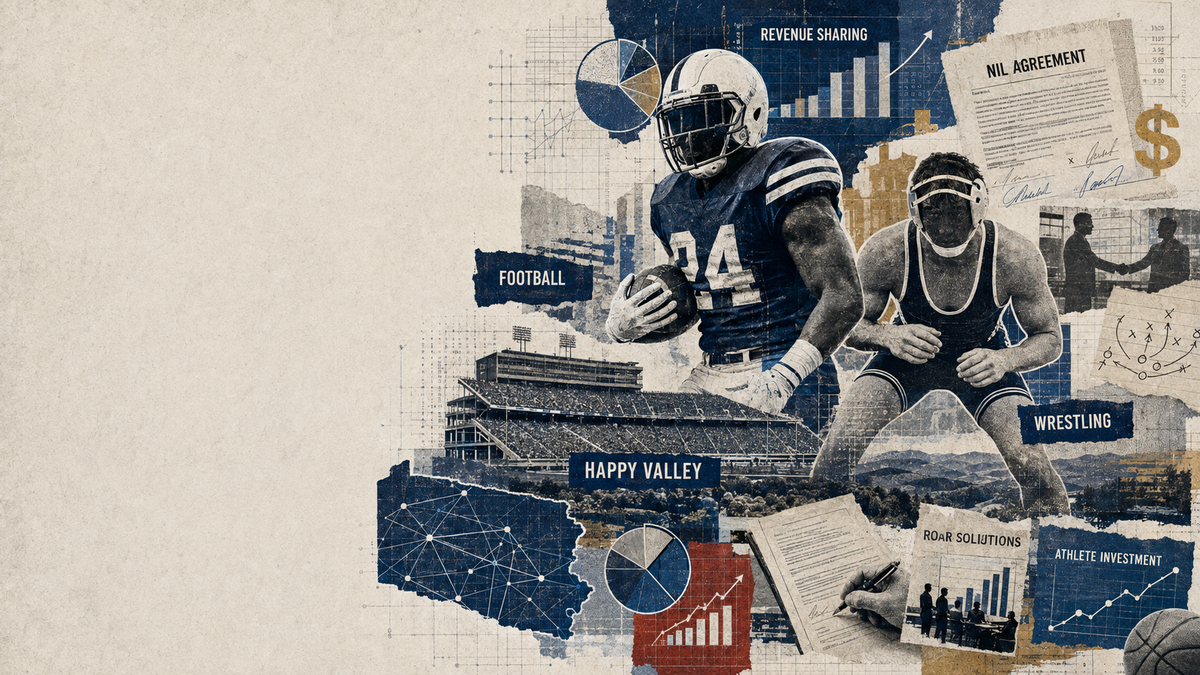
Penn State heads into the 2026–27 academic year with direct revenue sharing in place, an official NIL collective, a university-backed athlete-marketing arm, and a new apparel deal built partly around NIL opportunities. The athletic department isn't debating whether to play in the athlete-payment economy anymore. It's trying to build an operation that can fund a national-championship football roster without letting wrestling, volleyball, hockey, and the rest of the country's largest sports portfolios fall behind, and it's doing that for more than 800 athletes across the department, which makes for one of the more interesting financial balancing acts in college sports right now.
How Penn State Pays Athletes in 2026
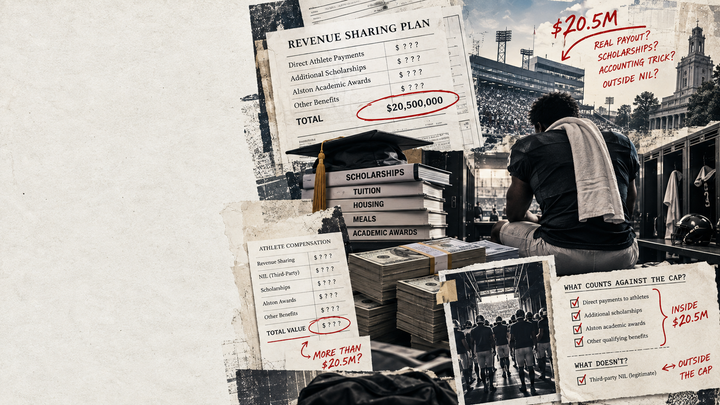
The House settlement split athlete compensation into two tracks. The first is direct revenue sharing. Starting in July 2025, participating schools could distribute roughly $20.5 million a year to athletes, and that number is expected to climb to about $21.3 million for 2026–27.
Penn State athletic director Pat Kraft has said the university plans to share revenue at the maximum allowable level. That puts Penn State in the group of schools treating the settlement cap as a baseline rather than a nice-to-have. The department also created a Legacy Fund and expanded its sport-specific excellence funds to help cover the new scholarships and other costs the settlement brought.
The second track is third-party NIL. Athletes can still sign endorsement, licensing, appearance, social media, and other commercial deals outside the university, though those agreements now come with reporting requirements and review from the College Sports Commission, especially when donor groups or businesses tied closely to an athletic department are involved.
Penn State's setup covers both sides of that market. The university handles direct revenue sharing, while Happy Valley United, corporate sponsors, Playfly Sports, and individual businesses work the commercial side. A school's revenue-sharing number and its total roster cost aren't the same number, and Penn State's structure is built around that gap.
Penn State's Reported Athlete-Payment Breakdown
Most universities keep this information close to the vest, but Penn State's fiscal-year 2025 financial report gave an unusually clear look at how it prioritizes athlete payments. The department reported about $18.4 million in institutional NIL spending. Football got roughly $13.3 million of that. Men's basketball received around $3 million, wrestling took in about $1.4 million, baseball got around $300,000, and women's basketball received a much smaller share.
Those numbers came before the House settlement was fully up and running, but they show where Penn State put its money rather than what it promised to do. Football accounted for about 72% of the pool, men's basketball for roughly 16%, and wrestling for close to 8%. Everyone else split what was left, and that split probably won't be exactly repeated, but it's a reasonable starting point for estimating what the 2026–27 revenue-sharing model might look like.
Estimated 2026–27 Revenue-Sharing Allocation
|
Sport |
Estimated allocation |
Estimated share |
|
Football |
$15.0M–$15.8M |
70%–74% |
|
Men's basketball |
$3.0M–$3.5M |
14%–16% |
|
Wrestling |
$1.4M–$1.7M |
7%–8% |
|
Women's basketball |
$300K–$600K |
1%–3% |
|
Baseball and other sports |
$400K–$900K |
2%–4% |
|
Estimated total |
About $21.3M |
100% |
Those are editorial estimates, not a Penn State payroll release — athlete contracts stay private, and the university hasn't published a full 2026–27 breakdown. Even with that caveat, Penn State will likely put most of its direct-payment money into football, keep a solid second tier for men's basketball and wrestling, and spread the rest around more selectively. That's a standard Power Four setup. What sets Penn State apart is who's sitting in third place.
Wrestling Changes the Formula
At most big athletic departments, the revenue-sharing conversation starts with football, moves to men's basketball, and then drops off fast. Penn State wrestling doesn't follow that pattern. The program is one of the true dynasties in modern college sports, with a devoted national fan base, elite recruiting classes, strong donor backing, and a head coach, Cael Sanderson, whose name carries real commercial weight well beyond State College.
Public reporting shows Penn State spent about $1.4 million on institutional NIL for wrestling in fiscal 2025. Add third-party NIL and wrestling-specific donor support, and the program's total athlete-compensation capacity could climb toward $2.5 million or more. That would make Penn State wrestling one of the most expensive and best-backed programs in the sport, and it says something about how the department approaches revenue sharing overall. Football is still the economic engine, but Penn State seems willing to fund programs that can compete for national titles, draw an audience, and excite donors.
What Does the Football Roster Cost?
Penn State hasn't released a full football payroll, but public valuation models put the 2026 roster's open-market value somewhere around $25 million to $26 million. That figure isn't the money Penn State has spent. It measures what players could command on the open market, not what they've actually been signed for, but it's still a useful benchmark.
If Penn State puts around $15 million toward football through revenue sharing, the program would need another $10 million or more from collectives, sponsors, donors, and individual endorsement deals to fund a roster valued near $25 million. That would put Penn State below the most aggressive programs, reportedly running $35 million to $45 million compensation models, but still comfortably in the national-contender tier.
Estimated Penn State Football Compensation Model
|
Source |
Estimated annual value |
|
Direct revenue sharing |
$15.0M–$15.8M |
|
Collective and donor-backed NIL |
$5.0M–$8.0M |
|
Commercial endorsements and licensing |
$2.0M–$4.0M |
|
Estimated total football spend |
$22.0M–$27.8M |
This is a planning estimate, and the outside-NIL piece is especially hard to pin down since individual endorsement deals and collective agreements are usually private. It does line up with Penn State's overall financial picture, though. The university reported approximately $254.9 million in athletics revenue for fiscal 2025, up roughly 15% from the previous year. Football alone brought in about $146.8 million and produced an operating surplus of around $57.6 million.
Penn State clearly has the money to compete in this economy. The harder question is whether it can pull in enough outside NIL support to keep up with the wealthiest programs once every school is maxed out on revenue sharing.
Happy Valley United Becomes the Outside Engine
Happy Valley United came together in 2023 when Success With Honor merged with the football-focused Lions Legacy Club, creating one official collective that covers all 31 sports, instead of several groups competing for the same donor dollars. The organization says it supports more than 800 athletes across every varsity program, and its current platform reports over 10,000 members and $2.1 million in NIL distributions, along with memberships, events, merchandise, sweepstakes, and other fan experiences.
The collective's job is shifting after the House settlement. In the early NIL days, collectives often worked like an outsourced payroll department: donors put in money, athletes did some light promotional work, and the funds helped schools recruit or keep players. That doesn't fit as cleanly anymore, since direct school payments now cover a big chunk of roster costs, and third-party deals need a real commercial purpose and a reasonable compensation range to hold up.
That means Happy Valley United has to operate more like an actual marketing business: selling memberships, building an audience, producing content athletes can use, organizing appearances, developing products, and proving its deals create real commercial value. Penn State's alumni base is enormous. The trick is turning that scale into steady, recurring revenue rather than relying on a handful of donors every time the transfer portal opens.
ROAR Solutions Connects the Pieces
Penn State launched ROAR Solutions in January 2025 as the central hub for athlete endorsements, brand development, entrepreneurship, media, sponsorships, and NIL support. It pulls together five pieces: the Nittany Lion Club and its sport-specific excellence funds, the Brand Academy, DisruptU, Happy Valley United, and Playfly Sports.
The Brand Academy helps athletes build and monetize their own personal businesses. DisruptU, created with former Penn State football star LaVar Arrington, focuses on athlete storytelling and media. Playfly runs Penn State's sponsorship operation and connects companies with athletes, while Happy Valley United handles the fan- and donor-driven side. Put together, those pieces give Penn State one system linking institutional payments, donor support, athlete education, content, and corporate sponsorships — something it didn't have when NIL first started. None of it will matter much if it turns into a pile of logos and committees, but it could matter a lot if it consistently converts Penn State's audience into real commercial opportunities for athletes.
The adidas Deal Adds Another NIL Layer
Penn State's 10-year apparel partnership with Adidas kicks off July 1, 2026. It covers footwear, uniforms, apparel, sideline gear, marketing, and athlete opportunities. Penn State has called it a record investment in the department, and adidas has committed to NIL and brand campaigns across all 31 varsity sports.
Every Penn State athlete will also be eligible for the adidas NIL Ambassador Network, giving athletes outside football and basketball a shot at national-brand exposure even if their sport doesn't have much of a local endorsement market on its own. Revenue sharing will stay concentrated in football and a handful of other sports, but an apparel partner can create smaller opportunities that scale across the entire department: social campaigns, product launches, athlete content, appearances, affiliate marketing. For a school sponsoring 31 sports, that adds up.
Penn State's Real NIL Advantage
Penn State doesn't have a single donor who defines its entire athlete-payment system. There's no obvious Mark Cuban or Phil Knight figure who explains everything, and in an era obsessed with billionaires and viral payroll numbers, that can look like a weakness on paper. It might end up forcing Penn State to build something more durable.
The university has a massive alumni network, a football program pulling in nearly $150 million a year, an official collective, a sophisticated sponsorship partner, championship-level programs outside football, and an apparel deal built partly around NIL. Revenue sharing sets a foundation of roughly $20.5 million. Happy Valley United adds donor and fan support on top of that. ROAR Solutions connects athletes with brands and business resources, and adidas brings a national commercial platform into the mix. Football drives the biggest payments, while wrestling proves Penn State will make real investments outside the two traditional revenue sports.
That's a strong model, but it isn't cheap. Penn State wants to compete for football championships, keep one of the broadest athletic departments in the country intact, protect its wrestling dynasty, improve basketball, expand scholarships, and finance a major Beaver Stadium renovation, all at the same time. Tradition and the promise of development used to be enough to sell recruits. Now tradition still counts, but every promise eventually has to show up on a balance sheet.
Bottom Line
Penn State has the money to compete and the brand power to back it up. What's still unproven is whether it's finally built the organization needed to turn both into a lasting advantage, and the 2026 season should start answering that.
Comments ()