
Why Big Ten Athletic Directors Are Becoming CEOs
Big Ten schools increasingly hire athletic directors with CEO-level skills as NIL, revenue sharing, and media economics transform college sports.

For a long time, being an athletic director at a major university was a pretty straightforward job. They hired coaches, kept donors happy, ensured the department complied with NCAA rules, and showed up to games. The money was good and growing, and most ADs stuck around for 15 or 20 years.
That job is gone.
Look at what's happened across the Big Ten since 2021. Nebraska has already gone through two athletic directors. Penn State, Ohio State, USC, Washington, Iowa, Northwestern, Maryland, Wisconsin, Michigan State, and Rutgers have all seen leadership changes or serious shakeups. That's roughly two-thirds of the conference. When that many schools are replacing the person at the top of their athletic department in such a short window, something bigger is going on than a bunch of people retiring at the same time.
So what changed?
The Money Got Massive and Complicated
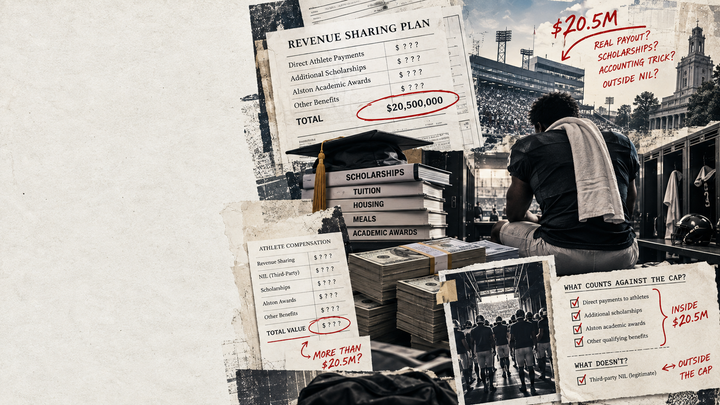
The Big Ten recently signed a TV deal worth more than $7 billion. Schools now pay their athletes directly, with figures around $20.5 million per school per year under a recent legal settlement. NIL, the system that lets athletes earn money from sponsorships and endorsements, has turned college sports into something that looks much more like a business negotiation than an extracurricular activity.
A typical athletic director's day used to involve reviewing building plans, meeting with boosters, and watching a game. Now that same person might start the morning talking about athlete pay structures, then move to a meeting about stadium revenue, then negotiate with donors over NIL money, then deal with legal questions about the department's finances. Some football programs have even hired general managers, a role that didn't exist in college sports not long ago.
These departments aren't really operating like university offices anymore. They're adjusting to the new terrain and operating like pro sports franchises.
The Challenge of Growth and Change
Athletic departments that have grown faster than their management systems are already starting to feel the strain. A department that once ran smoothly with a small front office and a handful of senior staff now oversees hundreds of employees, million-dollar athlete compensation packages, NIL negotiations, legal teams, and revenue analysts, all at the same time. The informal, relationship-based style that worked when an AD knew every coach personally and could make decisions over a handshake doesn't scale to a $200 million operation.
That's where the risk lives. As these departments grow, meetings multiply, decisions slow down, and it gets harder to figure out who's actually responsible for what. A poorly-timed call on an NIL deal, a mismanaged donor relationship during a stadium project, or a slow response to a locker room crisis can cost a program recruits, money, and trust; sometimes all three at once. Without leaders who know how to build real organizational systems, delegate effectively, and manage increasingly specialized staffs, growth doesn't just create new opportunities. It creates new vulnerabilities. The Big Ten schools that are rethinking who sits in the athletic director's chair aren't just chasing a trend; they're trying to ensure their management can keep up with the enterprise they've built.
Iowa Saw this Coming
Beth Goetz at Iowa is a good example of a school preparing for this shift rather than reacting to it.
Iowa didn't promote someone who'd been around the department for decades. Instead, they brought Goetz in from outside in 2022. She'd previously been an AD at Ball State. She held senior roles at UConn and Minnesota, which gave her a position specifically designed to let her learn the whole operation before taking the top job. That's how big companies plan for leadership transitions. It's not how college athletics traditionally worked.
Since taking over, Goetz has dealt with changes to the football program, facility projects, and preparations for the new athlete payment system. She terminated a legacy offensive coordinator and brought in a forward-thinking replacement who has modernized Iowa's offense, terminated a long-time men's basketball coach and replaced him with an analytics-driven wizard who took the Hawkeyes to the NCAA elite eight in his first year, and managed a transition to a new women's head coach who has maintained Iowa as a national power. Whether every decision works out perfectly or not, the bigger point is that Iowa recognized that things were changing and hired someone built for a different kind of challenge.
Northwestern tells a different version of the same story. New AD Mark Jackson walked into a job that included cleaning up a major football hazing scandal, managing an $850 million stadium rebuild, keeping donors engaged, and competing in a newly expanded 18-team Big Ten. That's not a traditional athletic administration role. That's a crisis-and-growth executive role with a sports title attached.
Maryland Tried Something New
Maryland made what may have been the boldest hire of all when it brought in James Smith from the Atlanta Braves. He came from professional sports, not college athletics, which raised some eyebrows.
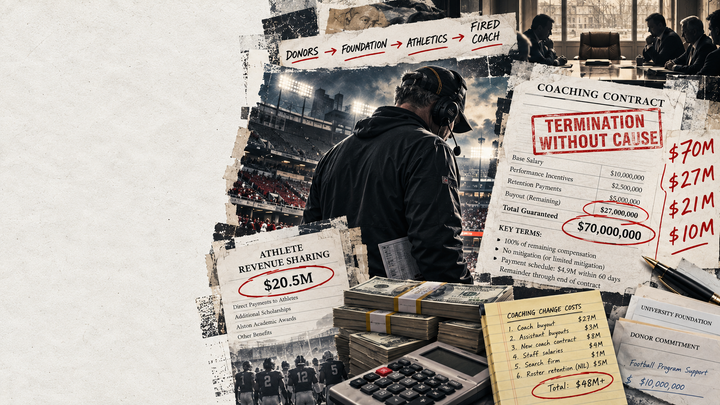
But consider the scale of what he's managing. Many Big Ten programs now bring in over $200 million a year. They have hundreds of employees, and they own or manage major real estate. Football coaches earn salaries you'd normally see at large corporations. At some point, running one of these departments starts to look a lot more like running a mid-sized company than overseeing a university sports program.
Maryland may be the first school to hire with that reality fully in mind.
Not Everyone Has Made Dramatic Changes
Plenty of Big Ten schools have kept the same leadership and are doing just fine. Illinois has stuck with Josh Whitman. Michigan has Warde Manuel. Purdue and Oregon have also maintained stability at the top. Institutional knowledge and long-standing donor relationships still matter a lot, especially at schools with deep-rooted athletic traditions.
And most of the newer hires still came up through college athletics: Beth Goetz, Pat Kraft at Penn State, Jennifer Cohen at USC. Nobody's filling these jobs with Wall Street executives who've never set foot on a college campus.
The shift is more subtle than that. Schools seem to want experienced athletic administrators who also think like executives, people who understand revenue, legal risk, organizational growth, and crisis management, not just coaches and compliance rules.
A Key Factor Seldom Considered
Organization structures also have a profound impact on this role. An organization with decentralized decision-making structures and essentially powerless Athletic Directors will likely make decisions more slowly, in a more committee-like mode. Committees are sources of organizational friction, best used to delay rather than enhance decisions. Under those circumstances, the best Athletic Director is essentially handcuffed and powerless.
The ideal solution is power and authority combined with a visionary who is flexible, quick to understand change requirements, and makes excellent decisions. The big dogs in the Big Ten, like Michigan, Ohio State, and Penn State, can bury their mistakes with money, but the smaller players will stay relevant and competitive by using their resources more effectively. This is why the position has become critical.
What Comes Next
The schools that figure out this new model fastest will probably have a real edge: better at attracting talent, more financially stable, quicker to adapt when the rules change again (and they will keep changing).
Those who treat this like it's still 2010 may find themselves falling behind in ways that winning a bowl game can't fix.
Athletic directors still hire coaches, attend ribbon cuttings, and deal with angry emails after bad seasons. That part hasn't changed. But the presidents and boards hiring them seem to be asking a different question than they used to.
It's not just "can this person manage an athletic department?" It's "can this person run a quarter-billion-dollar operation in one of the most unpredictable industries in the country?"
It's the same job title but a completely different job.
Comments ()