
Purdue NIL in 2026: Revenue Sharing, Football Spending, and Athletic Strategy
Explore Purdue's 2026 NIL strategy, revenue sharing, football spending, and how organizational efficiency could help the Boilermakers compete in the Big Ten.

Purdue isn't going to outspend Ohio State. It isn't going to out-donor Oregon or out-alumni Michigan. Everyone in West Lafayette knows this, and the athletic department has apparently decided the honest response isn't to pretend otherwise: it's to compete on a different axis entirely.
That's always been the Boilermaker pitch, actually. Purdue has stayed relevant in the Big Ten for decades without the boosters, the brand, or the built-in recruiting pull that Ohio State, Michigan, Penn State, and now Oregon bring to every cycle. What it has had instead is a habit of getting more out of less. Revenue sharing is about to test whether that habit still counts for anything.
Money Matters More Now, But It's Not the Whole Story.
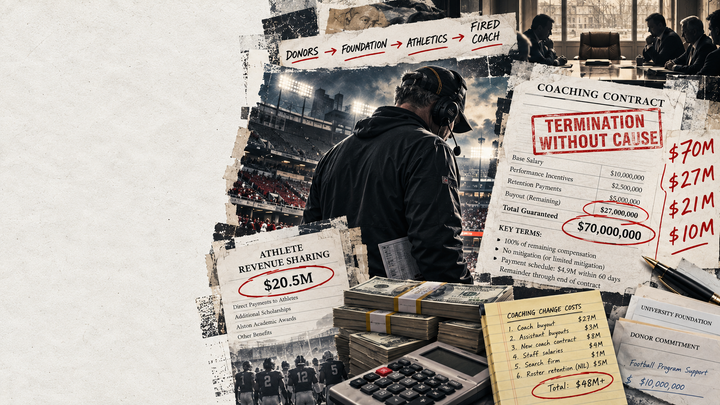
It's tempting to treat NIL and revenue sharing as a straightforward auction: biggest checkbook wins. There's truth in that, more than there used to be. But plenty of programs with real money still misspend it: bad evaluations, poor retention decisions, coaches who can't develop the players they recruit. The House settlement raised the stakes: it didn't rewrite the fact that organizations still have to make good decisions to turn a budget into wins.
Purdue's argument, implicit as it is, rests on that gap between resources and results. The university has spent decades building a reputation, mostly in engineering, around optimization and measurable output rather than prestige for its own sake. Whether that instinct actually translates to a football roster is the interesting question here.
Athletic Departments Are Now Running Investment Portfolios
For most of the sport's history, an athletic director's job was facilities, coaching hires, donor relations, and TV deals. NIL added a layer of complexity by introducing collectives and endorsement deals, but schools remained one step removed from actually paying players. That distance is gone.
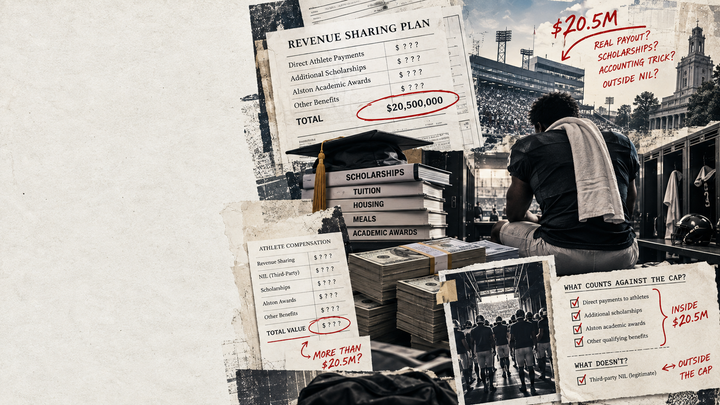
Since the House settlement, participating schools can share up to $20.5 million annually with athletes starting in 2025-26, a figure expected to grow as revenue increases. That's not just a new expense line. It's a new way of thinking about the roster: every dollar spent retaining a quarterback is a dollar that isn't going to an offensive tackle, or to keeping an All-American libero from testing the portal.
Pro sports has already run this experiment. Baseball teams with $250 million payrolls miss the playoffs regularly, while analytically sharper front offices with a fraction of the budget exceed expectations. College athletics is heading toward the same dynamic, and it's exactly the kind of competition Purdue has historically been decent at.
What Purdue Is Actually Spending
Purdue doesn't publish its total athlete-compensation figures, so any number here is an estimate rather than a disclosure. Based on the school's commitment to fully fund the ~$20.5 million cap, along with publicly known details about its NIL infrastructure and donor base, News Expeditions estimates Purdue's total compensation ecosystem, revenue sharing plus outside NIL, at roughly $31 million a year. That lands it in the Big Ten's middle tier: well short of Ohio State, Oregon, or Michigan, but roughly in line with Wisconsin, Iowa, and Illinois.
News Expeditions' estimate is based on full participation in NCAA revenue sharing, publicly available information regarding institutional NIL infrastructure, and comparative Big Ten spending data. Purdue has not publicly disclosed a comprehensive annual total for athlete compensation.
Basketball Gets a Bigger Slice Than Usual
Athletic director Mike Bobinski (now resigned) was unusually candid about how Purdue plans to divide its revenue-sharing pool. Rather than funneling close to 75% into football, the rough industry norm, Purdue is directing a bit less to football and noticeably more to men's basketball than most peer programs.
That's not sentiment, it's math. Matt Painter has built one of the sport's steadiest programs: multiple Big Ten titles, a run of NCAA Tournament success, and a 2024 national title game appearance. Basketball isn't a side project propped up by football money at Purdue; it's a genuine national asset, and the allocation reflects that.
Football still gets the largest share, because it has to. Rosters run over 100 deep, recruiting infrastructure is expensive, and the sport still drives the vast majority of ticket revenue, donor energy, and media attention. Purdue isn't neglecting football. It's just refusing to treat basketball as an afterthought when the results argue otherwise.
Purdue has apparently decided that Olympic sports participation in revenue sharing will be essentially nil, so don't expect much from those programs. This is a strategic decision to allocate scarce resources and go all-in on support for its larger brands.
Two Brands Beat One
Painter's success has quietly given Purdue something most one-sport-dependent programs don't have: optionality. Schools that live and die by football alone tend to overcorrect financially the moment football struggles, because there's no second pillar to lean on. Purdue has one.
That matters more now than it used to, given the uncertainty the sport is dealing with: transfer portal churn, realignment, and the possibility of more legal challenges to the current model. Programs with more than one nationally relevant sport have more room to absorb shocks. Purdue basketball draws television audiences, tournament runs, and donor enthusiasm independent of how the football team is doing, which gives the athletic department a bit more room to maneuver than its raw budget would suggest.
NIL Didn't Go Away, It Got More Complicated
A common misread of the House settlement is that direct revenue sharing replaced NIL collectives. It didn't. Athletes can now collect institutional revenue-share payments while still pursuing legitimate third-party deals, endorsements, appearances, social media work, camps, autograph sessions, and collective payouts, provided they meet the NCAA's commercial standards. Rather than simplifying the marketplace, that's added another layer athletic departments have to manage: how much comes from the school, how much comes from outside, and how the two are coordinated without stepping on each other.
Purdue's infrastructure here is more developed than many outsiders assume. The Boilermaker Alliance functions as the main donor-backed collective, while the athletic department's Boilermaker Marketplace Exchange connects athletes with businesses for above-board commercial work. Together, they form something closer to a layered investment structure: institutional money as the base, outside NIL as the targeted top-up that can decide close recruiting battles.
The bigger point is that schools no longer compete purely on budget size. They compete on how well-coordinated their entire financial ecosystem is: donors, collectives, local business networks, transparency, all of it.
Purdue's Best Case: Engineering the Roster
Purdue's institutional identity has long revolved around engineering and applied problem-solving, and it's not much of a stretch to think that culture bleeds into how the athletic department operates. Engineering programs prize optimization and iteration over prestige. Those instincts map reasonably well onto an environment where every roster decision now has a real financial cost attached.
Plenty of schools treat NIL as fundraising: get more money in the door. Purdue seems more inclined to treat it as systems management: get more value out of the money already there. Those aren't mutually exclusive, but they lead to different behavior. One chases acquisition, and the other chases efficiency.
Painter's program is the clearest existing proof of concept. Purdue basketball rarely wins recruiting rankings, but it has consistently developed unheralded players into All-Americans, NBA picks, and conference champions, mostly through roster continuity rather than annual turnover. Whether that same patience can work in football, where roster sizes are triple basketball's and the transfer portal churn is relentless, is the open question. But the added complexity in football also means there's more room for a disciplined program to find an edge that sloppier competitors miss.
Football Still Runs the Business
None of this changes the fact that football pays the bills. Big Ten media revenue is built overwhelmingly on football viewership, and attendance, sponsorships, and donor giving all track football performance far more than basketball's. A great basketball season adds value; a consistently competitive football program reshapes the department's entire financial picture.
The problem is that football has become much more expensive to compete in. The Big Ten now includes Ohio State, Michigan, Oregon, Penn State, USC, Washington, and others running NIL operations with tens of millions in annual donor support, on top of recruiting brands that draw attention almost regardless of results. Purdue is fighting that fight from a noticeably smaller financial floor every cycle.
It would be easy to conclude that Purdue can't compete on those terms. But that assumes competing on those terms is the only path. Companies that challenge dominant incumbents rarely win by copying them; for instance, Southwest didn't out-buy the legacy airlines, and Costco didn't out-stock every big-box competitor. They found a different lever. Purdue's version of that lever is likely to be identifying players before their market value peaks, locking them in with targeted revenue-share investment, and developing them inside a stable coaching environment rather than chasing the top of every recruiting class.
That means occasionally losing a five-star to a bigger check elsewhere and being fine with it, so long as enough undervalued players are being found and developed before everyone else notices them.
Two Kinds of Capital
Most national NIL coverage programs are based on one axis: money. Collective size, donor totals, and recruiting-class rankings. That's financial capital, and it's real. But there's a second kind that gets far less attention: organizational capital: coaching continuity, evaluation quality, administrative competence, cultural stability. Financial capital determines how much a program can spend. Organizational capital determines how much value the spending actually produces.
That distinction explains why similarly funded departments can post wildly different results over time, and why wealthy programs sometimes underperform anyway. Purdue is unlikely to lead the conference in the first category. The more interesting question is whether it can stay near the top in the second, and that's a genuinely open question rather than a foregone conclusion in either direction.
The Bigger Experiment
Much of the national NIL conversation fixates on the handful of programs that can spend the most, such as Ohio State, Oregon, Texas, Texas A&M, and Miami. Fair enough; they'll set the tone at the top of the market. But the more useful test case might be a tier or two below that group.
If Purdue renovates its moribund football program, once again makes bowl games, develops NFL talent, stays relevant in basketball, and occasionally contends in football despite a modest budget, other resource-constrained programs will take notice of how it's structured its revenue-sharing allocation and evaluation process. If Purdue struggles anyway, that tells a different story: that financial concentration in college sports has reached a point where smart management can no longer fully offset a spending gap. Either outcome is worth watching.
Bottom Line
Revenue sharing will reward programs with real money, and Purdue isn't going to change that. But financial capital has never been the entire story in sports, and the House settlement hasn't repealed that reality: it's just made the stakes higher. Purdue is entering this era with an engineering-minded administrative culture, a basketball program that already proves the development-over-recruiting model can work, and a football program still looking for its own version of sustainable success rather than an expensive shortcut.
None of that guarantees titles. But it does put Purdue in a position to answer a question the rest of the sport is also grappling with: if the NIL era rewarded fundraising, does the revenue-sharing era reward management instead? Purdue has spent decades betting that intelligent organizations can hang with wealthier ones. The next several years will show whether that still holds when players are, for the first time, a literal line item on the balance sheet.
Comments ()