
Oregon NIL in 2026: Revenue Sharing, Phil Knight, and the Ducks' Next Competitive Advantage
How much does Oregon spend on NIL? We estimate the Ducks' 2026 athlete economy, from football and basketball to TrackTown USA.
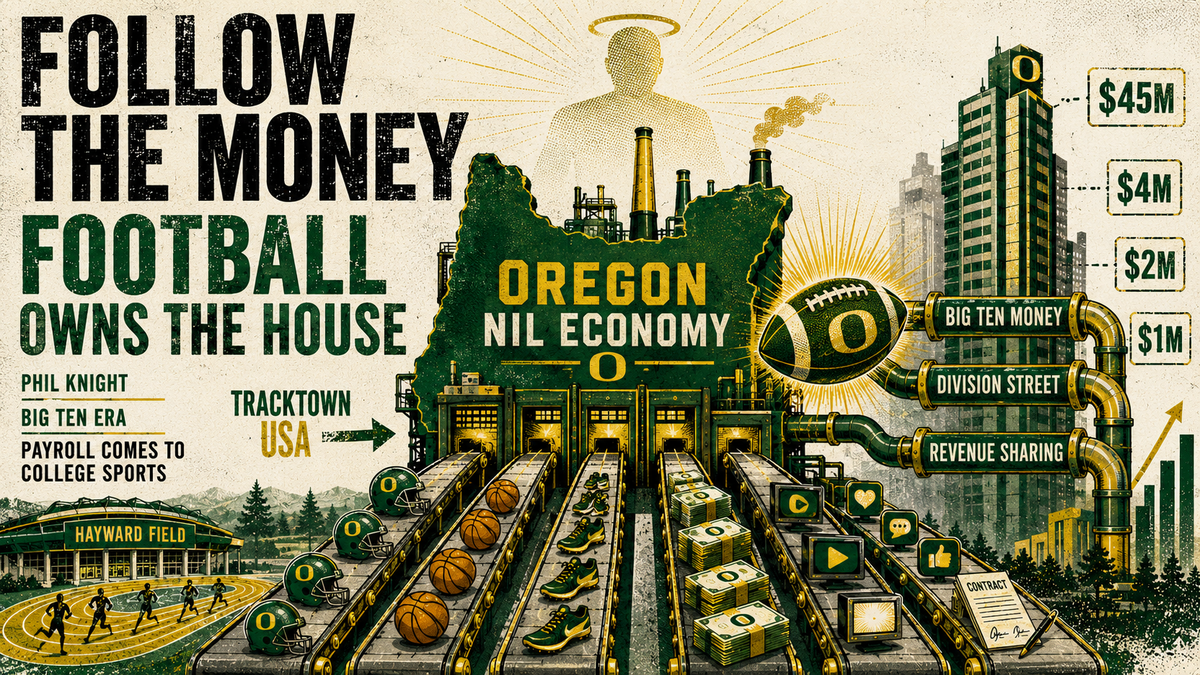
Oregon spent the better part of two decades proving it could crash college football's country club. The Ducks had uniforms, speed, the Nike glow, and an annoying tendency to make traditional powers look like they still used fax machines to send recruiting letters. By 2026, however, Oregon no longer looks like an outsider sneaking through a side door. The Ducks have a seat at the table, a share of Big Ten television money, and the most sophisticated athlete marketing ecosystem in college sports.
That creates a different challenge, as, for years, Oregon tried to convince people that it belonged among the sport's bluebloods. Revenue sharing asks a trickier question: can Oregon behave less like a disruptor and more like a Fortune 500 company managing a multi-million-dollar payroll?
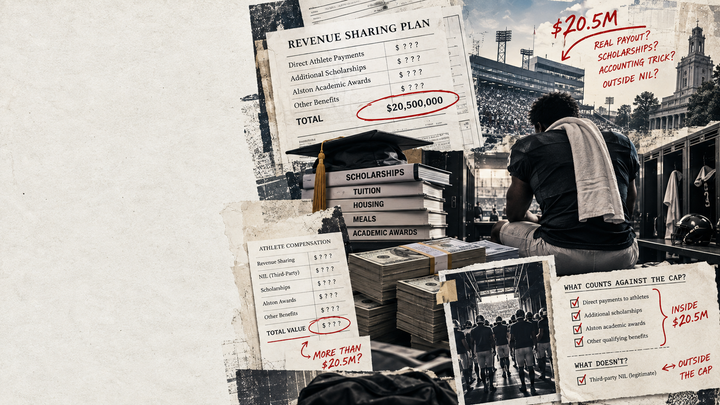
The House settlement changed college athletics by moving athlete compensation out of the shadows and onto the balance sheet. Schools can now distribute $20.5 million annually to athletes through direct revenue sharing while NIL opportunities generated by outside businesses, collectives, and donor-backed organizations continue alongside those payments. The result resembles a strange hybrid economy. Everyone smiles politely and continues calling it amateur athletics.
Some athletic departments entered the NIL era like a homeowner attempting to assemble an IKEA entertainment center armed only with optimism and a missing Allen wrench. Oregon entered with a blueprint, a donor network, an apparel empire, experienced marketers, and Phil Knight hovering somewhere in the background like the final boss in a college football video game.
Big Ten Money Changed the Balance Sheet
The move to the Big Ten did more than give Oregon longer road trips and a reason to learn where West Lafayette sits on a map. It fundamentally altered the Ducks' financial position.
Oregon reported approximately $185 million in athletic department revenue during fiscal year 2025, with football generating nearly $120 million on its own and producing almost $59 million in positive operating results. That means football doesn't merely support Oregon athletics. Football owns the house, pays the mortgage, buys dinner, and occasionally reminds everyone else who keeps the lights on.
Big Ten television money should only strengthen that position. Media distributions provide stability, predictability, and scale. Donors can become tired or dead, but television contracts do not. Athletic departments love recurring revenue for the same reason ordinary people enjoy direct deposit: it shows whether anyone feels inspired.
That growing revenue stream also makes revenue sharing easier to absorb. Athletic directors often talk about broad-based excellence, preserving Olympic sports, and maintaining institutional traditions. Those goals sound wonderful, but the budget usually reveals something simpler. Athletic departments invest most heavily in the sports that produce the largest audiences, attract the biggest donors, and convince networks to write nine-figure checks.
At Oregon, the answer remains football.
Football Owns the House
Football has become Oregon's primary economic engine because it produces the largest crowds, the largest television audiences, the most national exposure, and the clearest path toward championship relevance. Oregon still cares deeply about track, volleyball, softball, baseball, and basketball. It should. Oregon possesses legitimate history in all those sports. Yet modern athletic departments increasingly operate according to a market principle that sounds cold but proves remarkably durable: invest where the money comes from.
Football expenses exceeded $60 million in fiscal year 2025. Coaching salaries approached $24 million, recruiting costs peaked at $2 million, and travel expenses climbed toward $4 million. Those figures describe a program built to compete nationally rather than simply participate politely and enjoy the snacks at conference meetings.
The same logic will shape revenue sharing.
Industry observers expect football programs at major schools to receive between 70 and 80 percent of direct revenue-sharing payments. Applying that framework to Oregon's expected $20.5 million annual distribution suggests football could receive $15 million to $16 million. Men's basketball ranks a distant second, with $3 million to $4 million. Women's basketball may command $1 million to $2 million as audiences continue expanding nationally. Baseball could approach $1 million. Track and field might receive between $500,000 and $1 million, while volleyball, softball, and other Olympic sports would divide the remainder.
Revenue sharing tells only part of the story.
Outside NIL opportunities, Oregon's existing infrastructure suggests the Ducks remain among the country's biggest players. Several industry estimates place Oregon's football NIL market somewhere between $25 million and $30 million annually. Combined with direct payments, Oregon football's total athlete compensation ecosystem could approach $40 million to $45 million per year.
Those numbers remain estimates. Nobody at Oregon accidentally leaves spreadsheets labeled "Quarterback Payroll 2026" next to the coffee machine. Still, Oregon's recruiting results, transfer portal success, Division Street initiatives, and donor capacity suggest the Ducks participate near the top of the marketplace.
That marketplace creates an awkward conversation in Eugene.
TrackTown Meets Payroll Reality
Oregon proudly embraces its identity as TrackTown USA. Hayward Field stands among the finest track facilities in the world. Olympic trials routinely visit Eugene, distance runners become local celebrities, and somewhere in town, a former miler discusses split times with the intensity most people reserve for stock portfolios.
Unfortunately, markets rarely possess much sentimentality.
An elite left tackle protecting a playoff quarterback now carries greater economic value than an All-American middle-distance runner capable of posting a four-minute mile while the rest of us need a breather after carrying groceries upstairs.
Athletic departments can discuss preserving traditions, celebrate broad-based excellence, and produce glossy brochures featuring smiling athletes from every sport imaginable. Eventually, however, someone opens Excel. At that point, television audiences, ticket sales, donor enthusiasm, and playoff access begin making decisions.
The math sits quietly in the corner wearing a green visor and ruining everyone's feelings.
Oregon manages this tension better than most schools because donor support remains unusually strong and the university genuinely values track and field. Nevertheless, the Ducks cannot entirely escape the market forces reshaping college athletics. Nobody escapes math.
Phil Knight Built the Machine
Every Oregon NIL discussion eventually circles back to Phil Knight. That makes perfect sense. Knight helped transform Oregon from a respected regional program into a globally recognizable athletic brand. Nike's influence, Oregon's visual identity, and decades of investment in facilities accelerated the Ducks' rise.
But reducing Oregon's advantage to one wealthy benefactor oversimplifies the story. Plenty of universities have wealthy donors, and some donors have enough money to buy up small island nations and still complain about taxes. Oregon's advantage lies elsewhere: the Ducks built systems.
Division Street professionalized athlete branding. Ducks of a Feather developed new opportunities for fan engagement. Oregon integrated marketing, recruiting, apparel, social media, donor relationships, and athlete promotion years before many competitors fully understood NIL.
A wealthy donor can solve a short-term roster problem, but an organized ecosystem solves recurring talent problems. That distinction matters because the next stage of college athletics may reward efficiency more than simple spending.
Oregon Is Betting on Efficiency
College football increasingly resembles private equity with shoulder pads.
Everyone spends money, but spending alone no longer creates separation: efficiency does. Can Oregon identify undervalued transfers, retain veterans before they enter the portal, and avoid paying premium prices for players whose best season already happened two years ago? Can Oregon maintain roster continuity while competitors engage in annual free agency? Those questions matter because future NIL advantages may emerge from valuation rather than aggression.
Early adopters benefited by moving quickly, but the next winners may simply evaluate talent more accurately.
Oregon already behaves more like a venture-backed startup than a traditional athletic department. Oregon tests ideas, embraces branding opportunities, and moves quickly through changing markets. The Ducks do not necessarily need to outspend everyone, but they do need to outthink enough people to stay in the National Championship conversation.
The Bottom Line
Oregon enters the revenue-sharing era from a position of unusual strength. Big Ten money expands the balance sheet, football supplies the engine, and Phil Knight remains an influential figure. Division Street provides sophisticated infrastructure. NIL already feels less like an experiment in Eugene and more like a mature business unit. Still, the Ducks face a challenge that money alone cannot solve.
They must preserve what makes Oregon distinctive while adapting to a marketplace that increasingly values football over everything else. They must keep TrackTown relevant, support Olympic sports, reward athletes fairly, and compete with programs that spend aggressively every winter.
Oregon spent twenty years convincing college football that the future wore neon uniforms and moved faster than everyone else, but the next decade asks whether Oregon can prove something harder.
Can the Ducks build a sustainable competitive advantage in a sport that now resembles Wall Street, except the traders are nineteen years old and occasionally post cryptic emojis after practice?
Comments ()