
Why College Athletic Directors Act Fast: Attendance Is the Real Financial Pressure
College sports attendance is quietly eroding, and the damage lingers even after teams improve. From Nebraska to Iowa, declining crowds are forcing athletic directors to act faster as fan habits break and revenue risks mount.
College sports still talks like it owns your Saturday.
That assumption used to be safe. You inherited a team, you showed up, and even when things went sideways, you didn’t really reconsider the habit. You complained, sure, but you still went.
That’s the part that’s changed, and it's changed quietly enough that many athletic departments are still treating attendance as a lagging indicator of wins and losses. It isn’t. It behaves more like a routine, and once people break a routine, they don’t automatically rebuild it just because the product improves.
You can see it most clearly in places that still insist everything is fine.
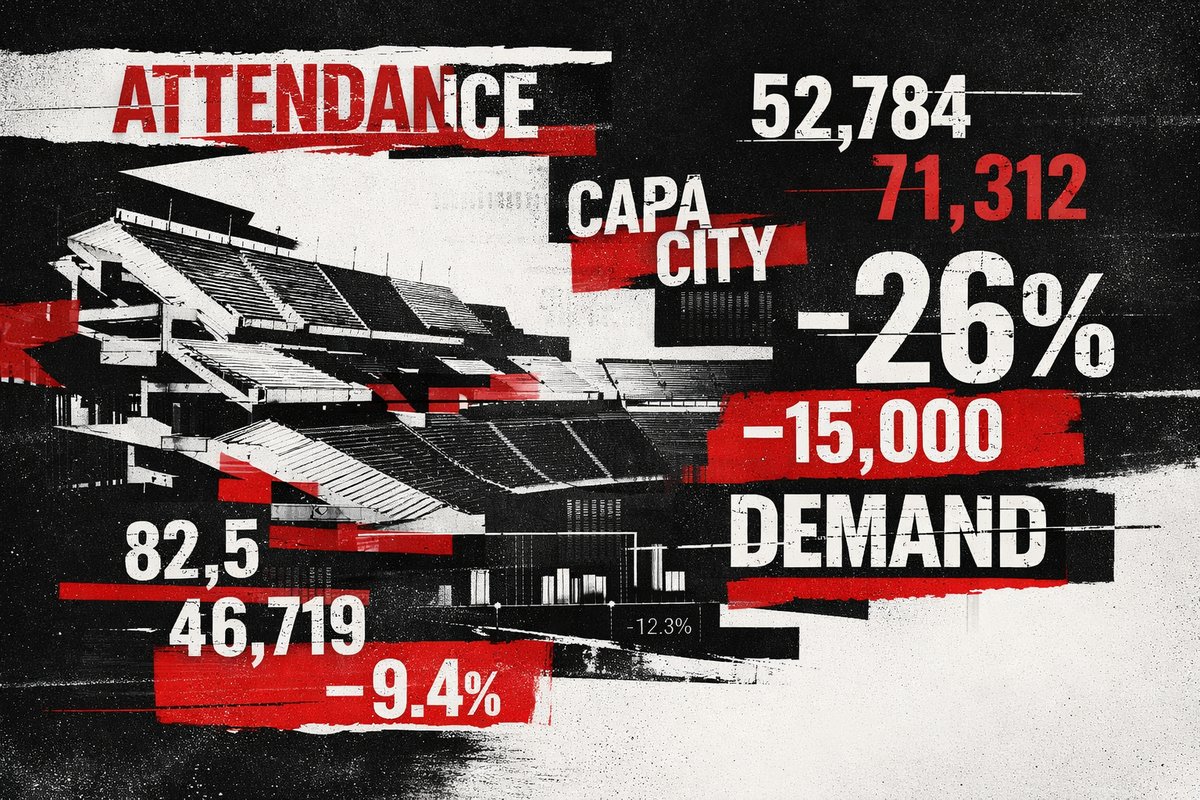
Nebraska is an obvious example. The sellout streak is intact, and it gets referenced constantly, usually as proof that the program hasn’t lost its grip on the fan base. Spend any time paying attention to the actual crowd, though, and the story is less comforting. Announced attendance has slid from the mid-90,000 range a decade ago into the mid-80,000s, and the difference between tickets distributed and people physically in the building isn’t hard to spot anymore.
The streak survives because it’s being managed. That’s not nothing, but it’s also not the same thing as organic demand. At some point, those two ideas diverge, and once they do, you’re no longer measuring loyalty. You’re measuring how well you can maintain its appearance.
Tennessee went through the same cycle without the benefit of a narrative shield. When the numbers dropped from over 102,000 in the late Fulmer years to below 90,000 in 2017, there wasn’t much to hide behind. Neyland just looked different. Quieter, thinner, easier to ignore on television.
What’s worth paying attention to is not that it came back under Josh Heupel. It’s how long it took. The team got more interesting before the building filled back in. You needed repeated proof that this wasn’t another false start before people adjusted their weekends again.
That lag shows up in basketball too, even in places that should be insulated from it. UConn Huskies men's basketball never lost its brand, but it absolutely lost some of its in-person energy after Jim Calhoun stepped away and the program drifted. The AAC years mattered more than people admit. You could feel it in Hartford, especially.
Even after titles under Dan Hurley, not every game snapped back to what it used to be. That’s the uncomfortable part. Winning at the highest level didn’t instantly repair the habit of showing up. It helped, obviously, but it didn’t reset things overnight.
UCLA is a slightly different animal, but it lands in the same place. The Rose Bowl has always been a challenge, and pretending otherwise hasn’t helped. When attendance slides from around 60,000 to the 40,000s in a building of that size, the emptiness becomes the story. It doesn’t matter if the team is competent. It doesn’t even really matter if it’s good. The visual tells people this isn’t essential.
And once something stops feeling essential, you’re in a different business.
The easy explanation is television. Better broadcasts, easier access, no traffic. All true, and all incomplete. What’s happening is that people are replacing one routine with another. Saturdays fill up with something else. The tailgate group that used to organize itself without thinking suddenly needs coordination, then stops coordinating. Kids grow up watching games on screens instead of sitting through them, and that difference adds up over time.
By the time a program improves, it isn’t asking fans to come back. It’s asking them to change their behavior again, which is a much heavier lift than most administrators want to admit.
This is where the decision-making piece gets interesting, because you can start to see which athletic departments understand what’s happening and which ones are still operating on the old timeline.
At Iowa Hawkeyes men's basketball, the late-stage Fran McCaffery years had a very particular feel to them. The team was competitive enough to avoid collapse, but the energy around the program softened. You could see it in the building and in the secondary market. It wasn’t dramatic, but it was real. Fans voted with their feet, and actual attendance numbers plummeted.
That’s the kind of situation where, ten years ago, an athletic director might have waited it out. Let the results stabilize, assume the crowd follows. Beth Goetz didn’t take that approach. Moving on and pivoting toward Ben McCollum wasn’t just about wins and losses. It was an acknowledgment, whether stated or not, that the fan base was drifting and that drift tends to accelerate if you let it.
Maybe it works, maybe it doesn’t. Coaching hires always carry risk. What’s different is the timing. The move came before the situation became untenable, which is exactly what the attendance data would suggest you should do.
Because once people fully disengage, the math gets ugly in a hurry.
Even a modest drop in football attendance, say five thousand seats per game, can bleed a few million dollars out of an athletic department when you account for tickets, concessions, and everything around the event. Basketball operates on a smaller scale, but the margins are tighter, so the impact shows up quickly.
The bigger issue sits just behind that. When season ticket holders scale back, they rarely bounce right back to their old level. Some do; plenty don’t. That affects donor pipelines, which are doing more work than they used to, under the added pressure of NIL and rising operating costs.
It’s easy to talk about media rights covering everything. They don’t. Not completely, and not for everyone.
The programs that have rebuilt attendance tend to follow a pattern, but it is slower and less satisfying than people like to pretend. Penn State Nittany Lions football didn’t just flip a switch and get back to full capacity. It took time under James Franklin, and it took repeated confirmation that the program had stabilized. Michigan Wolverines football saw something similar with Jim Harbaugh. One good season wasn’t enough. Two helped. Three started to feel real.
That’s a long runway in an environment that doesn’t reward patience.
Which is why the “we’ll be fine when we win again” line is starting to sound dated. By the time you’ve won again, your audience may have already moved on to something else. Pulling them back is not as simple as reminding them you exist.
At some point, empty seats stop being a symptom and start becoming the problem itself. And once you get there, you’re not just fixing a team. You’re trying to rebuild a habit.
Comments ()