
Big Ten Athletic Director Rankings 2026: Who Turns Money into Wins?
UPDATED Sept 10 2026 Big Ten athletic directors ranked by NIL, fundraising, coaching and results—why Iowa leads in efficiency while wealthy programs lag.
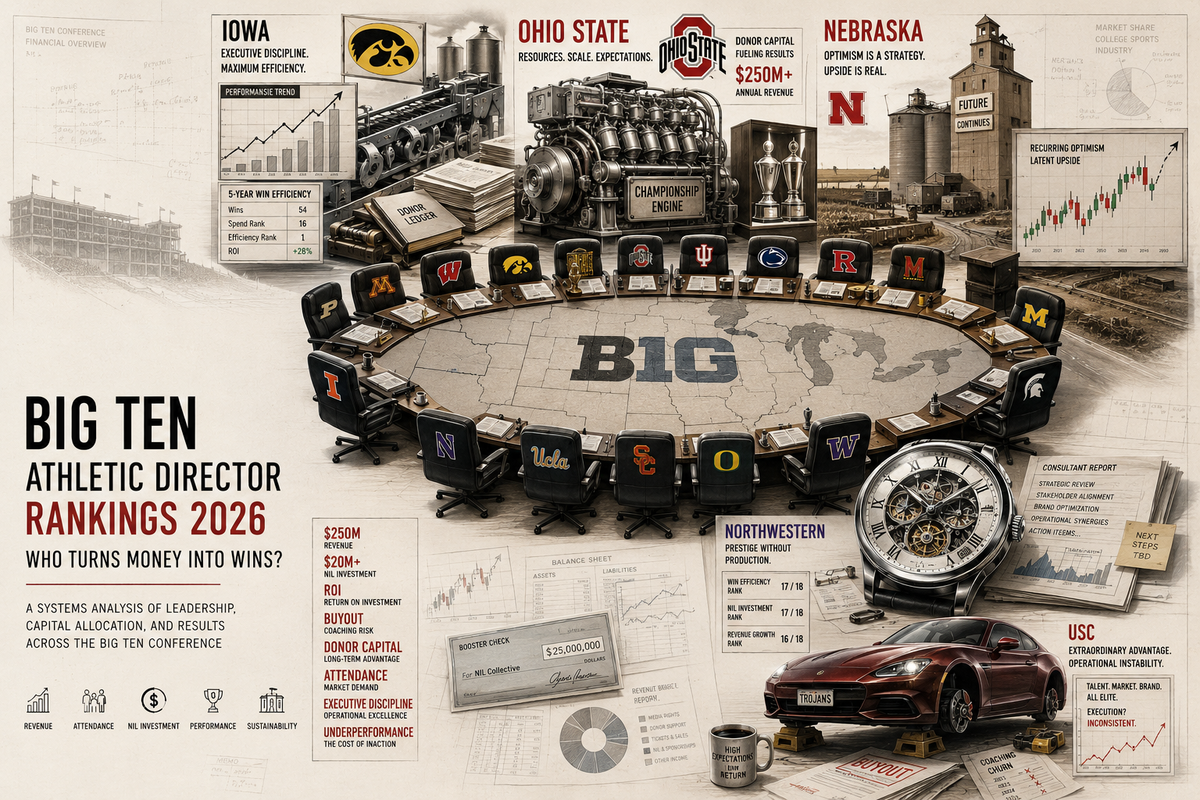
Everyone loves to argue about coaches. Fans pick apart play calls, recruiting whiffs, and substitution patterns like the head coach is the only person who decides whether a program lives or dies. Coaches matter, no question, but they're working inside systems that somebody else built, funded, and is watching over their shoulder every single day.
Walk into any major Big Ten athletic department in 2026, and you'll find the most powerful person in the building probably isn't wearing a headset on Saturdays. It's the athletic director, and even that title feels too small now. The modern Big Ten AD is part CEO, part capital allocator, part fundraiser, part talent-acquisition boss, part media strategist, part real-estate developer, and part political operator. Increasingly, they're running something that looks a lot like a professional sports franchise, just one that happens to sit on a college campus.
You can see the shift happening right now in the conference's executive suites, and it's happening fast. Rutgers installed Keli Zinn, who's been tearing into NIL and revenue operations with real urgency. Wisconsin brought in Shawn Eichorst in July 2026, poaching him from his job as deputy athletic director and chief operating officer at Texas. Purdue hired Tommy McClelland in August and leaned hard into his background in external strategy, multimillion-dollar fundraising, and revenue generation. Michigan State turned to Dan Bartholomae after J Batt walked out the door barely a year into the job.
Then, on August 31, UCLA dropped the biggest bombshell of them all. The school fired Martin Jarmond and handed the reins to longtime Los Angeles Lakers executive Tim Harris, now CEO and Director of UCLA Athletics. Michigan's turn is coming too. Warde Manuel is stepping down at the end of 2026 after a culture review uncovered real problems with accountability, organizational structure, oversight, and reporting, and the school is about to launch a national search for his replacement.
That's a staggering amount of turnover for a conference with just 18 schools, and none of it is an accident. The Big Ten is quietly replacing the traditional college athletic director with someone who looks more like a CEO of a sports-and-entertainment company.
The $20 Million Reason the Job Changed
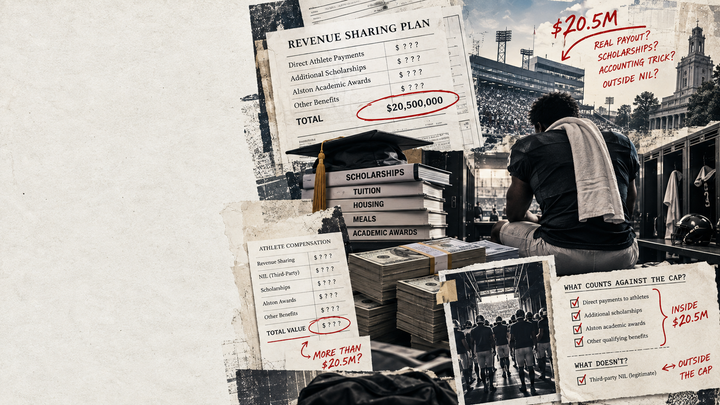
Follow the money, and the turnover starts making sense. The House settlement and direct athlete revenue sharing blew up the old model. Roster spending used to flow mostly through the NIL ecosystem, kind of off to the side. Now it's a direct, explicit obligation sitting right on the athletic department's books, and Big Ten schools are working with roughly $20.5 million that can go straight to athletes, on top of NIL payments, coaching salaries, facilities, travel, recruiting, debt service and everything else already stacked on the balance sheet.
So an athletic director can't just manage sports anymore. They have to go find money, real money, and a lot of it. Corporate sponsorships are getting more aggressive by the month. Stadiums are becoming year-round entertainment venues rather than just game-day buildings. Jersey patches, once unthinkable, are here to stay. Naming rights don't feel taboo anymore, premium seating keeps expanding, and athletic departments are folding NIL operations, sponsorship sales, and donor development into one machine. Facilities aren't just judged on whether they help you land a five-star recruit anymore. They're judged on whether they make money.
Ohio State's 2026 deal with JPMorganChase shows exactly where this is headed. Chase is now the jersey-patch partner across all 36 of Ohio State's varsity programs, and the deal comes with fresh resources specifically earmarked to support NIL opportunities for Buckeye athletes.
Nebraska might be the clearest, most physical example of where the money is going. Troy Dannen's $600 million Big Red Rebuild isn't just a facelift for an old stadium. Nebraska is calling it a forward-looking, revenue-generating project, full stop, and Dannen has already named alcohol sales, stadium concerts, and shows as new revenue streams the school needs just to stay competitive. Memorial Stadium isn't only where Nebraska plays football anymore. It's an asset sitting on the balance sheet, and it needs to earn its keep. That changes everything about who's qualified to run the department.
Methodology
These rankings score all 18 Big Ten athletic departments across five factors that increasingly decide who wins and who loses. The first factor is donor, NIL, and revenue-share mobilization, because modern college athletics runs on cash the way a car runs on gas. The second is coaching selection and oversight, still the most visible and expensive job an AD has. The third is decision speed, because programs that stall on obvious decisions almost always end up paying for it later. The fourth is revenue creation and fan engagement. The fifth, and honestly the most important, is performance relative to resources.
That last one is what separates the genuinely great operators from the schools that just happen to be rich. Money should buy you a decent floor, but what you do above that floor is on you. This ranking also leans harder into commercial modernization than it used to. An AD who doesn't understand sponsorship inventory, premium seating, NIL, revenue sharing, media rights, capital projects, and donor segmentation is a lot like a CEO who's never bothered to learn the company's biggest markets, and that doesn't fly anymore.
The Big Ten as an Economic System
Picture the Big Ten as a portfolio of competing sports businesses, because that's basically what it's become. Every university is sitting on a genuinely valuable legacy asset: a powerful brand, fans who are emotionally all in, scarce live programming nobody else can offer, and its own distinct management culture. Some schools are managing those assets with real discipline. Others seem to think prestige alone is a strategy, and it isn't.
Look at it that way, and athletic departments stop feeling like side projects bolted onto a university. They start looking like businesses fighting each other for talent, capital, attention, and market share. Some are disciplined compounders, quietly getting better every year. Others are cautionary tales with gorgeous logos.
Full Big Ten Athletic Director Rankings — September 2026
1. Indiana — Scott Dolson
The single biggest change from the last version of this ranking is impossible to miss. Indiana went from an interesting strategic story to proving the whole theory works.
Scott Dolson was named 2026 NACDA Athletics Director of the Year, the first Indiana AD ever to win it. The award came right after a season that still feels unreal, one where Indiana football went 16-0, won the Big Ten championship, and brought home the program's first national title.
Here's what actually matters, though. It's not just that Indiana won; it's that the administration refused to treat history as destiny. Football didn't have to stay the forgotten little brother at a basketball school forever, and capital, coaching, donor alignment, and institutional buy-in all shifted at once, moving the ceiling for the whole program with them.
Indiana is the single clearest proof of the idea driving this entire ranking: the right administrative decisions can completely rewrite the economics and identity of an athletic department.
Award: The Market Repricing. Indiana found out its old football valuation was never carved in stone.
2. Iowa — Beth Goetz
Iowa is still one of the clearest examples in the conference of doing more with less, and the school just made a loud statement about Goetz herself. In August, Iowa extended Beth Goetz's contract through January 31, 2032, locking in rare executive stability right as most of the Big Ten is shuffling leadership. Iowa also says Goetz has built out the department's NIL infrastructure to keep rosters together across all 22 sports.
Iowa doesn't have Ohio State's or Michigan's donor depth, and it doesn't have USC's recruiting backyard either. And yet football keeps winning, wrestling still matters nationally, women's basketball has turned into a legitimate commercial draw, and the whole department feels unusually put together. Goetz's biggest advantage might just be that Iowa almost never seems confused about what Iowa is.
Think of it like a regional manufacturer that keeps posting excellent returns while flashier competitors blow twice the budget trying to reinvent themselves every other year.
Award: The Spreadsheet Alchemists. Iowa keeps pulling results out of a budget that shouldn't be able to produce them.
3. Ohio State — Ross Bjork
Ohio State operates on a scale almost nobody else in the country can touch, and Ross Bjork's job looks nothing like Goetz's. He doesn't need to invent advantages out of scarcity; he needs to make sure Ohio State never wastes the massive ones it already has.
The JPMorganChase partnership is exactly the kind of deal that shows where this whole market is headed: corporate branding, jersey inventory, NIL money and institutional partnerships, all bundled into one giant commercial relationship. The Buckeyes are cutting the cord from old-school ticket sales, donations, and conference checks because at this point, pretty much every piece of the brand can be turned into cash. That's modern athletic administration operating at the biggest possible scale.
4. Nebraska — Troy Dannen
Nebraska is still one of the strangest, most fascinating stories in American sports, but the business story behind it has grown much stronger. Under Dannen, Nebraska is tackling the massive $600 million Big Red Rebuild, a Memorial Stadium overhaul built specifically to generate new revenue. Dannen has flat-out named alcohol sales, volleyball reseating, stadium concerts, and shows as part of the plan to raise the money Nebraska needs to recruit and keep its players.
Here's the thing about Nebraska that people forget: indifference was never the problem. Almost nobody in the country has fans this locked in, this loyal, this loud. The problem has always been turning that love and that money into results that actually match the investment. Dannen seems to get it. Nebraska is finally treating its stadium, its brand, and its donor base as pieces of the same machine rather than just traditions to protect and preserve, and if the wins ever catch up to the business side, Nebraska's ceiling is enormous.
Award: America's Most Leveraged Hope Trade. No other school can raise this much money on the promise that the breakthrough is just around the corner.
5. Illinois — Josh Whitman
Illinois earns a real jump up the board this time. Josh Whitman has quietly become the dean of Big Ten athletic directors, which is wild given how much turnover the rest of the conference is going through, and Illinois extended his deal through 2036, with the option to run through 2039.
What matters even more is the money. Illinois says athletic revenue has climbed 102 percent during Whitman's tenure, compared to 71 percent across the whole Big Ten, and topped $200 million for the first time ever in FY2026. The school has also strung together three straight years of record ticket revenue and gone after new commercial money through jersey patches and corporate branding. That's what modernization is supposed to look like.
Illinois used to feel like a sleeping asset nobody was paying attention to. Now it looks like the management team finally found the alarm clock and actually got out of bed.
6. Oregon — Rob Mullens
Oregon is still the clearest example in the conference of what concentrated capital can do. Phil Knight's money changed what's possible in Eugene, sure, but boiling Oregon's success down to one wealthy donor sells the administration short. Money can absolutely be wasted, and Oregon has built an organization that actually knows how to turn donor capital into facilities, recruiting, branding, and national relevance, rather than letting it just sit there.
Rob Mullens is still Oregon's athletic director, which gives the Ducks something that's getting rarer by the month in this conference: real executive continuity. Not many athletic brands are run with this much intention.
7. Penn State — Pat Kraft
One correction worth making clearly: Penn State's athletic director is Pat Kraft, not Pat Chun. Pat Chun runs Washington Athletics.
Kraft is sitting on one of the biggest sleeping giants in college sports, with a huge alumni base, absurd football attendance, a genuinely national brand, and serious fundraising muscle behind him. His own words about 2025-26 tell you a lot. In Kraft's year-end letter, Penn State talked up massive investment in Beaver Stadium, expanded premium spaces, new technology, and upgrades across the entire athletic department.
That kind of language matters more than it sounds like it should. Penn State isn't talking about athletics as just protecting tradition anymore; it's talking about investment and competitive positioning. That's the language of the new market, full stop.
8. Washington — Pat Chun
Washington holds something genuinely valuable in the newly expanded Big Ten: a major-market brand with football credibility that's actually real. Pat Chun has been rebuilding the department's front office, and Washington's September 2026 leadership shakeup was described in plain terms as an attempt to build an executive team ready for the opportunities and headaches of modern college athletics.
Geography is still the main problem. Big Ten membership means huge media money, but it also means brutal travel costs and logistical headaches that Midwest schools simply don't deal with. Chun's job is to make national conference membership pay for itself without chipping away at the very things that made Washington attractive to the Big Ten in the first place.
9. Minnesota — Mark Coyle
Stability is worth a premium right now, while everybody else is swapping out leadership, and Minnesota extended Mark Coyle through June 2032 this summer. Coyle's never been the athletic director generating constant headlines, and that's probably a good thing, not a bad one. Minnesota says its athletic program drives roughly $473 million in annual economic impact and pulls more than 1.3 million people through its facilities every year.
Minnesota isn't the conference's most aggressive operation. It's one of its steadiest and steady counts for a lot of these days.
10. Rutgers — Keli Zinn
Rutgers might be running the most important modernization experiment in the whole conference right now. Keli Zinn arrived in July 2025 carrying more than two decades of Power Conference administrative experience, and since then, Rutgers says she's rebuilt NIL operations, modernized revenue generation and reorganized the entire commercial side of the department.
Then Rutgers did something genuinely bold. It launched Scarlet Knight Enterprises, a separate corporate arm built to pull together multimedia rights, corporate partnerships, ticketing strategy and NIL operations under one roof. The department also has an Executive Deputy Athletic Director and Chief Operating and Revenue Officer now, and just sitting with that job title for a second tells you everything about where college sports is going.
Rutgers finally seems to be treating its spot in the New York metro area as more than just leverage for media-rights negotiations. It's an actual economic asset that needs to be worked. Whether the wins show up in the long term is still an open question, but the strategy, at least, is finally clear.
11. Maryland — Jim Smith
Maryland's going through a similar reset. Under Jim Smith, Maryland pulled in a record $43.7 million in fundraising commitments in FY2026 from 10,366 donors, nearly $10 million more than the year before.
Maryland has always had a genuinely attractive hand of cards: it's close to Washington and Baltimore, its alumni are wealthy, its recruiting geography is strong, and its basketball brand is recognized nationally. For years, none of that turned into the athletic leverage it should have. Smith's early moves look like a genuine attempt to change how the place operates, not just another round of promises of better results next year. Maryland is still a stock with a lot of unrealized value sitting on the table, but it finally looks like somebody's taking the earnings problem seriously.
12. Wisconsin — Shawn Eichorst
Wisconsin represents one of the newest leadership changes in the conference. Shawn Eichorst became Wisconsin's athletic director in July 2026, arriving from Texas, where he was deputy athletic director and chief operating officer overseeing strategic planning, fiscal management, analytics, legal affairs, capital planning and business operations. Read that résumé again, slowly. It sounds a lot more like a corporate COO than the traditional picture of a college athletic administrator, and that's exactly the point.
The Wisconsin program underneath him is still excellent, with massive crowds, loyal donors, a powerful football brand, and one of the most recognizable identities in the entire conference. But Wisconsin is also proof that the market has lost patience. A historically great program can't just coast on stability anymore, because revenue sharing, NIL competition, and rising football costs mean standing still financially can actually mean falling behind competitively, even at a place with Wisconsin's history. Eichorst is inheriting a genuinely good business at exactly the moment when good might not cut it anymore.
13. USC — Jennifer Cohen
USC is still the conference's biggest resource-to-results head-scratcher. Jennifer Cohen has started putting real pieces of the commercial machine in place, though. USC's new 10-year Nike extension through 2036 includes a spot in Nike's Blue Ribbon Elite NIL program, exactly the kind of deal USC should be signing.
The bigger question is still whether the school can actually turn its ridiculous pile of advantages into consistent results. Southern California hands USC elite recruiting, a global brand, serious wealth, entertainment-industry connections, and one of the most valuable names in all of college football. At times, USC looks like someone who inherited an oceanfront mansion and somehow still managed to run into cash-flow trouble. Cohen's real challenge is making the business as valuable as the property it's sitting on.
14. Purdue — Tommy McClelland
Purdue's August hire of Tommy McClelland might be one of the most telling moves in the whole conference. When Purdue introduced McClelland as its new athletic director, the school leaned hard on his background in external strategy, multimillion-dollar fundraising, and revenue generation. Before this, he ran external affairs and revenue generation at Vanderbilt and served as Rice's athletic director. Those aren't side skills anymore; they're the actual job description now.
Purdue is stuck in a brutal neighborhood. It can't outspend Ohio State, Michigan, Oregon, or USC, not even close, so its only real path to relevance runs through unusually sharp, efficient management. Hiring McClelland says Purdue understands its next real advantage might have to be built commercially before it ever shows up on the scoreboard.
15. UCLA — Tim Harris
No leadership change in the Big Ten says more about where this is all headed than what UCLA just did. On August 31, UCLA fired Martin Jarmond and brought in longtime Los Angeles Lakers executive Tim Harris as CEO and Director of UCLA Athletics. Go back and read that title one more time: chief executive.
Chancellor Julio Frenk tied the move directly to NIL, athlete compensation, and the changing sports marketplace, saying UCLA needs an athletic model that can lead instead of just keep pace. He also admitted UCLA Athletics is carrying a serious financial deficit and that the old trajectory simply wasn't sustainable. Harris isn't your typical college administrator either. His UCLA bio lists more than 35 years in professional sports and business leadership, including running Lakers sponsorships, ticketing, marketing, media, broadcasting, and new revenue development.
This is bigger than a normal coaching change or front-office swap. It's an admission, in plain sight, that the entire business model has changed, and UCLA might end up being the Big Ten's most important test case for everything happening right now.
16. Michigan — Warde Manuel, Through December 2026
You can't evaluate Michigan right now without first talking about governance. Warde Manuel is stepping down at the end of 2026 after a wide-ranging culture review turned up serious issues with accountability, organizational structure, oversight, reporting systems, and retaliation, which changes the whole picture fast.
Michigan has nearly every structural advantage a program could ask for: elite academics, massive alumni wealth, one of the strongest sports brands in America, insane football demand, and the ability to raise money nationally. Its athletic department runs at roughly a quarter-billion dollars a year. Advantages like that make administrative failure harder to excuse, not easier.
Whoever takes over is walking into one of the best jobs in all of sports, but the job now demands more than just winning games. Michigan needs governance fixed right alongside the commercial side. The search for Manuel's replacement is going to be one of the most closely watched executive searches in all of college athletics, so pay attention to the résumé Michigan picks. It'll tell you a lot about what the school now believes an athletic director actually has to be.
17. Michigan State — Dan Bartholomae
Michigan State keeps showing everyone what administrative instability actually costs, and the latest stretch has been rough to watch. J Batt showed up in 2025, and by the next summer he was already gone. Michigan State then turned to Western Michigan athletic director Dan Bartholomae as its new vice president and director of athletics. That's an exhausting amount of turnover for barely a year.
Bartholomae could turn out to be a great hire, but Michigan State's real problem has become plain old continuity. It's starting to feel like a company that rolls out a brand-new strategic plan before anybody's even finished reading the last one. Money isn't the issue here. Stability is, and it's been the issue for a while now.
18. Northwestern — Mark Jackson
Northwestern is still the conference's clearest case study in underperformance. Mark Jackson took over in 2024, and to his credit, Northwestern can point to real wins, including national championships and outstanding academic numbers. Jackson also landed a five-year term on the NCAA Division I Men's Basketball Committee in June 2026, taking the Big Ten's seat.
But the big strategic question hasn't moved an inch. Northwestern sits next to one of the largest business hubs on the planet, carries an elite global academic reputation, and has an alumni network stacked with people in finance, law, medicine, consulting, technology, and corporate leadership. Now throw in the massive investment already sunk into the new Ryan Field. It's hard to find another athletic department in America with a bigger gap between the sheer sophistication of the human and financial capital sitting right there and how aggressively that capital has actually been used on the field.
Northwestern absolutely can compete. The real question is whether it wants to operate like a school, actually fighting for market share in a multibillion-dollar national sports business.
Award: Who Does the Least with the Most? No Big Ten school shows the gap between having resources and actually using them as clearly as Northwestern does.
Award: Most Likely to Hire Consultants to Confirm the Obvious. The final slide deck will probably conclude that winning games increases alumni engagement. Groundbreaking stuff.
The Great Athletic Director Turnover
Step back from the individual rankings for a second, and something remarkable jumps out: the whole conference is in the middle of an executive reconstruction. Rutgers has Keli Zinn. Wisconsin has Shawn Eichorst. Purdue has Tommy McClelland. UCLA has Tim Harris. Michigan State has Dan Bartholomae. Maryland is now under Jim Smith. Michigan is about to pick someone new once Warde Manuel leaves at year's end. Do the math, and roughly 40 percent of the Big Ten has recently changed its top athletic executive, or is about to.
And it's not just the names changing; the résumés are changing too. Fundraising matters more than it used to. Commercial partnerships matter more. NIL architecture matters more. Revenue-share management matters more. Facilities monetization matters more. Professional sports experience, once an odd fit, suddenly looks like exactly what these jobs need, and corporate strategy backgrounds look relevant in a way they never used to.
Even the vocabulary around the job has changed. Rutgers built Scarlet Knight Enterprises to centralize multimedia rights, corporate partnerships, ticketing, and NIL under one corporate roof. UCLA hired a CEO and Director of Athletics, not just another athletic director. Nebraska is openly calling stadium concerts, alcohol sales, and facility redevelopment revenue-generation strategies, no euphemisms attached. Ohio State put JPMorganChase jersey patches across all 36 varsity programs. Illinois says its athletic revenue has grown 102 percent during Josh Whitman's tenure.
This isn't just athletic departments getting a little more modern around the edges. It's market professionalization, happening in real time, across an entire conference at once.
From Athletic Director to Sports CEO
For most of the last century, the typical athletic director was a former coach or a longtime university lifer who worked their way up. The job needed relationships, scheduling smarts, hiring instincts, fundraising charm and a working knowledge of NCAA compliance rules. That model is dying, and it's dying fast.
A modern Big Ten athletic department can control hundreds of millions of dollars in economic activity every single year. Michigan alone has described an operation running roughly $250 million a year, spread across 29 teams and about 400 staff members. That's not a side program tacked onto a university anymore; that's a genuine enterprise, full stop, and enterprises eventually demand enterprise-level management.
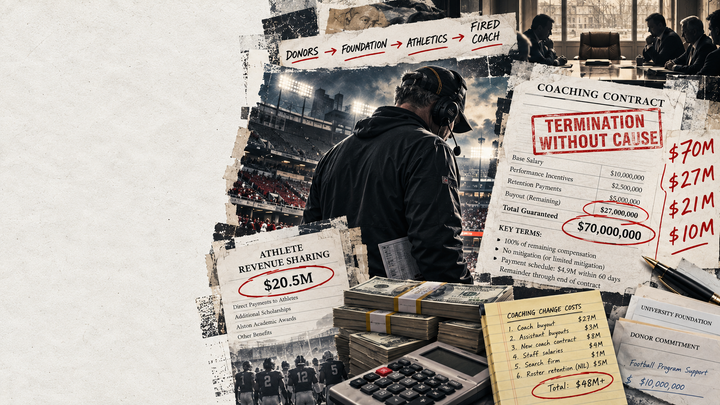
None of this means universities need to abandon what they're actually there for. It just means their educational missions now exist inside a brutally competitive sports marketplace, whether anyone likes it or not. An athletic director who fails commercially can end up failing competitively too, even with talented coaches and hard-working players on the roster, because a department that can't generate enough incremental revenue has less to spend on athletes, coaches, recruiting, facilities and keeping its own players from leaving. The line connecting the balance sheet to the scoreboard has never been more direct than it is right now.
Conference Superlatives
Best Current Transformation: Indiana, no contest. Most with the Least: Iowa is still the gold standard for doing more with less. Most Powerful Structural Machine: Ohio State combines scale, donor capacity, commercial opportunity, and sky-high expectations better than anyone else in the conference. Highest Strategic Upside: Nebraska remains one of the most compelling turnaround stories in all of college sports. Most Improved Business Operation: Illinois deserves much more credit than it's getting right now. Most Interesting New Executive Experiment: UCLA's decision to hire a Lakers executive could become the blueprint everyone copies if it actually works. Largest Resource-to-Results Gap: Northwestern still has the structural profile of a real contender, and a return on those assets has been way too modest for way too long. Most Important Upcoming Hire: Michigan, and it isn't particularly close.
White Knight Economics
Modern college athletics is starting to look a lot like venture finance. Programs are chasing anchor donors who can single-handedly reshape recruiting, retention, facilities and NIL capacity through one giant concentrated check. Oregon is still the obvious poster child here, but Indiana's rise proves this model isn't just reserved for Nike-level wealth anymore.
The upside is obvious. The governance risk is just as obvious, and it doesn't get talked about nearly enough. Money expects access; big donors expect real competence in return; and when one person, or a tight little group, supplies a disproportionate share of a program's competitive capital, athletic directors are stuck constantly balancing fundraising wins against actual institutional independence. The best athletic directors are going to have to become sharp managers of both capital and influence at the same time, and that might turn out to be the hardest part of this whole new job.
The Real Big Ten Standings
Regular standings measure wins and losses. A more honest set of standings measures institutional competence instead. Which athletic departments raise money efficiently? Which ones actually create new revenue instead of just squeezing bigger checks out of the same donors? Which hire strong coaches and cut loose the weak ones before failure gets baked into the culture? Which turn stadiums into assets that actually pay for themselves? Which treat NIL and revenue sharing as tools for building a roster instead of just annoying rules to grumble about? And which ones keep spending heavily while insisting, year after year, that real progress is happening just below the surface?
Indiana's rise shows exactly how fast institutional ambition can rewrite competitive reality when everything lines up. Iowa shows what real discipline can accomplish without ever touching the conference's biggest balance sheet. Ohio State shows what raw scale can do once it's actually managed like a real business. Nebraska shows how much loyalty a fan base can carry a program on while management tries to finally convert it into wins. Illinois shows what patient, steady administrative work looks like when it finally pays off. And UCLA hiring a Lakers executive shows something even bigger than any single school's story: the whole market has changed underneath everyone's feet.
Conclusion
College athletics has officially become an executive discipline, whether traditionalists want to admit it or not. The programs thriving right now are led by administrators who understand incentives, capital allocation, organizational design, media, sponsorships, real estate, donor psychology, and talent markets, all at once. They make the hard calls early instead of waiting for the situation to force their hand. They keep investor confidence up, which in this world just means keeping donors confident. They create new revenue instead of just fighting over how to slice up what's already there, and they've figured out the market is moving too fast now for the usual university habit of forming a committee and deliberating for two years before anything changes.
The wild turnover among Big Ten athletic directors right now isn't a coincidence. It's creative destruction, plain and simple. Universities are realizing that an athletic department chasing championships while managing $200 million or more every year can't be run the way it was run in 2006, or even in 2022. The House settlement kicked this whole shift into gear, NIL sped it up, the transfer portal sped it up more, and conference expansion added fuel. Corporate jersey patches, stadium commercialization, and professionalized roster management are all speeding it up again, right now, while you're reading this.
The next wave of successful athletic directors is going to come from all kinds of places: college administration, professional sports, finance, media, fundraising, and corporate operations. UCLA has already jumped, putting a 35-year professional-sports executive in charge of fixing its athletics business. Rutgers built an entire corporate enterprise around athletics revenue. Purdue went out and specifically hired someone with revenue-generation and external-strategy credentials. None of that is random. Those are signals, and they're not subtle ones.
The job title might still say "Director of Athletics." The actual job is turning into Chief Executive Officer of Sports, and that might be the single most important shift happening anywhere in the Big Ten right now. Because in this new conference, championships aren't just won on the field. Increasingly, they're built in the executive suite first.
Bottom Line: The Big Ten isn't just changing coaches or chasing recruits anymore. It's rebuilding its front offices from the ground up, and the schools that figure this out first, Indiana, Iowa, and Ohio State, are the ones pulling away. The ones still treating the AD job like it's 2006 are the ones you'll find near the bottom of this list, wondering where the gap came from.
Comments ()